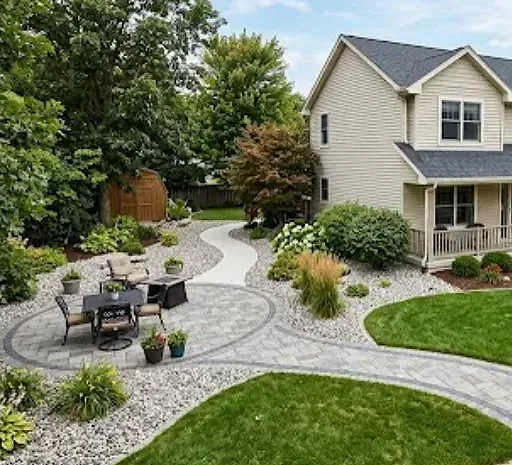
The Grounds Guys® provides guidance on which hardscape option is right for your yard:
|
The best hardscape option depends on how you use your yard, your budget, your drainage needs, and how much maintenance you want to handle.
- Patio pavers are ideal if you want a polished, customizable surface with long-term durability and easy repair.
- Gravel is a budget-friendly, low-maintenance choice that works well for pathways, drainage zones, and casual outdoor areas.
- Concrete offers a clean, seamless finish that's well-suited to high-traffic areas and modern home designs.
Each option has a distinct role in a well-planned outdoor space, and in many yards, using a combination of all three makes the most sense.
If your project involves a patio, walkway, driveway, or drainage-sensitive area, professional hardscape installation can help ensure the surface is planned around your soil, slope, drainage, and everyday use.
What Is Hardscaping and Why Does It Matter?
Hardscaping refers to the non-living elements of your outdoor space; pathways, patios, retaining walls, driveways, and decorative ground coverings. Unlike softscaping (lawns, gardens, trees), hardscaping creates structure, defines zones, and improves how your yard functions day-to-day.
A well-designed hardscape:
- Adds usable outdoor living space for entertaining, relaxing, or dining.
- Reduces lawn maintenance by replacing high-effort grass areas with durable surfaces.
- Improves drainage and reduces erosion when properly installed.
- Increases curb appeal and property value.
- Creates clear visual separation between garden beds, lawns, and activity areas.
The three most common hardscape surface materials—pavers, gravel, and concrete—each bring a different set of benefits, limitations, and design possibilities. Understanding how they compare helps you plan wisely and avoid costly mistakes.
For larger updates, The Grounds Guys® offers landscape and hardscaping services that can help bring structure, function, and curb appeal to your outdoor space.
Patio Pavers: Stylish, Durable, and Built to Last
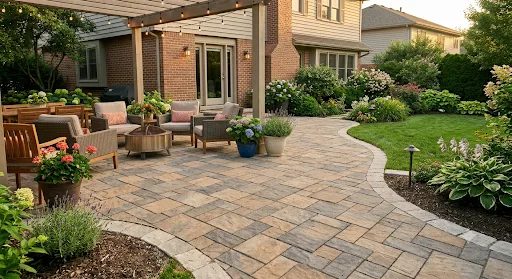
Patio pavers are individual units—typically made from concrete, natural stone, brick, or porcelain—that are set in a pattern over a compacted base. They're one of the most popular hardscape choices for residential outdoor spaces because they combine visual appeal with structural longevity.
Why homeowners choose pavers
- Design flexibility: Available in dozens of shapes, sizes, colors, and finishes, pavers can be laid in straight rows, herringbone, fan patterns, or custom designs.
- Easy repair: Individual units can be removed and replaced without disturbing the entire surface.
- Freeze-thaw resilience: In colder climates, pavers may handle seasonal ground movement better than poured concrete when installed over a properly prepared base.
- Long lifespan: Quality pavers installed on a proper base can last 25–50 years.
- Permeable options: Permeable paver systems allow rainwater to filter through, reducing runoff and pooling.
Best uses for pavers
Pavers are a versatile and durable choice for transforming your outdoor living spaces. Consider integrating them into key areas around your home, including:
- Patios and outdoor living areas
- Front walkways and entryways
- Pool surrounds
- Garden pathways
- Driveway aprons
Paver considerations
While pavers are a great option for many homeowners, it’s important to know the challenges you may face when installing and maintaining them.
- Higher upfront cost compared to gravel or basic concrete.
- Requires proper base preparation (compacted gravel sub-base and sand layer) to prevent shifting.
- Weeds can grow in the joints if the jointing sand is not maintained.
- Professional installation is recommended for large-scale and complex layouts.
Gravel: Affordable, Flexible, and Surprisingly Versatile
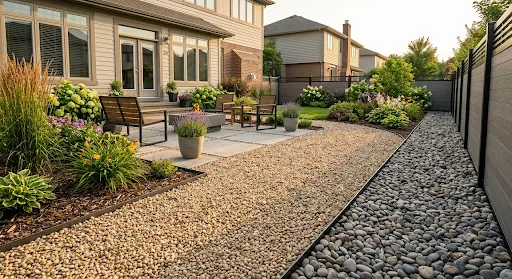
Gravel is one of the most underrated hardscape materials. Whether it's crushed stone, pea gravel, river rock, or decomposed granite, gravel offers a natural aesthetic and functional benefits that more rigid surfaces simply can't match, especially when drainage is a priority.
If gravel is the right fit for your pathway, side yard, or drainage area, professional gravel installation can help keep the material contained, level, and better suited to the space.
Why homeowners choose gravel
- Low cost: Gravel is one of the most affordable hardscape materials per square foot.
- Excellent drainage: Water drains directly through gravel, reducing puddles and soil erosion.
- Easy to install: Many gravel applications are quick with proper edging and a landscape fabric base.
- Low maintenance: Gravel doesn't crack, shift from frost heave, or require sealing.
- Natural look: Pairs beautifully with planted borders, woodland garden styles, and xeriscaping.
Best uses for gravel
Gravel is extremely versatile and can be used throughout outdoor spaces, including:
- Garden pathways and stepping stone corridors
- Side yards and utility access areas
- Low-maintenance lawn replacement zones
- Drainage swales and dry creek beds
- Decorative mulch alternative in planting beds
- Xeriscaping designs
Gravel considerations
Gravel has many benefits, but there are some challenges homeowners should consider.
- Can migrate and spread without proper edging.
- Not ideal for high-traffic areas where a firm, stable surface is needed.
- May require occasional top-ups as material settles or shifts.
- Can be uncomfortable underfoot in bare feet.
- Not recommended for sloped areas without proper edging or retaining systems.
Concrete: Clean, Durable, and Low-Maintenance Long-Term
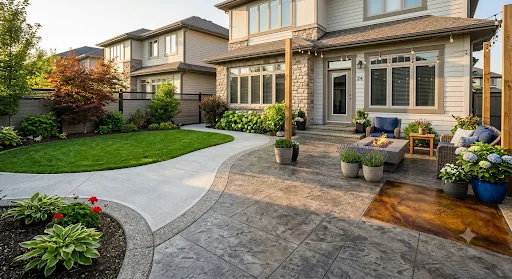
Poured concrete is one of the most widely used hardscape materials for good reason. It's strong, versatile, and, once installed correctly, requires minimal upkeep for years. Modern concrete finishing techniques have expanded concrete’s design potential well beyond the standard gray slab.
Why homeowners choose concrete
- Durability: Properly cured and sealed concrete can last 30+ years.
- Smooth, uniform surface: Ideal for outdoor furniture, entertaining spaces, and accessibility.
- Design options: Stamped, colored, exposed aggregate, and broom-finished concrete offer varied aesthetics.
- Low ongoing maintenance: No weeds growing in joints, no migration, and minimal upkeep once sealed.
- Strong load-bearing capacity: Well-suited for driveways and heavy-use areas.
Best uses for concrete
Concrete is useful in many outdoor spaces, including:
- Driveways and parking pads
- Large patios and entertainment areas
- Garage aprons and utility surfaces
- Pool decks (with non-slip finish)
- Commercial and multi-unit property pathways
Concrete considerations
Concrete is versatile, but it does have some challenges related to maintenance and repair, including:
- Susceptible to cracking over time, especially in freeze-thaw climates.
- Cracks are difficult and often costly to repair seamlessly.
- Longer installation timeline. Concrete must cure for several days before use.
- Spills (oil, rust, organic matter) can stain if not sealed.
- Limited permeability can contribute to surface runoff if drainage isn't planned well.
Pavers vs. Gravel vs. Concrete: Side-by-Side Comparison
Use this table to compare three options across the factors that matter most for residential hardscape decisions.
| Feature | Pavers | Gravel | Concrete |
| Upfront Cost | Higher | Lower | Moderate |
| Long-Term Durability | Excellent | Good | Good to Excellent |
| Repair Ease | Easy (replace units) | Easy (add material) | Difficult (patching visible) |
| Freeze-Thaw Performance | Excellent | Excellent | Fair (prone to cracking) |
| Drainage | Good to Excellent (permeable options) | Excellent | Poor (unless designed in) |
| Design Flexibility | Very High | Moderate | Moderate to High |
| Maintenance Level | Low to Moderate | Low | Low |
| Best For | Patios, walkways, pool decks | Pathways, drainage, garden areas | Driveways, large patios |
| Lifespan | 25-50 years | Ongoing (with top-ups) | 30+ years |
How to Choose the Right Option for Your Yard
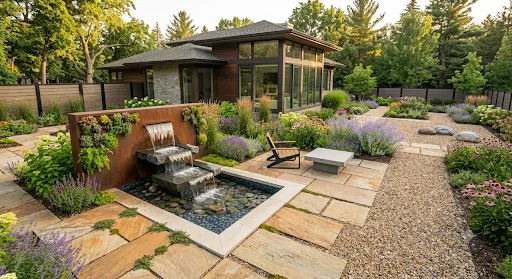
The best hardscape material isn't always the most expensive or the most popular—it's the one that fits your yard's specific conditions, your lifestyle, and your long-term plans.
Still gathering inspiration? These outdoor landscaping ideas can help you think through how hardscaping, plants, lighting, and outdoor living features can work together.
Consider your primary goal
- Want a polished outdoor entertaining area? Choose pavers or concrete.
- Need a low-cost solution for a side yard or utilitarian path? Choose gravel.
- Replacing a driveway or high-traffic surface? Choose concrete or pavers.
- Working on a water-wise or drought-tolerant garden? Choose gravel or permeable pavers.
Consider your climate
Winters in some areas are demanding on outdoor surfaces. Freeze-thaw cycles put significant stress on rigid materials like poured concrete, which is why concrete driveways and patios often develop cracks after several seasons. Pavers and gravel are inherently more forgiving because they allow for natural ground movement without catastrophic failure.
In dry, warm regions, many homeowners consider xeriscaping to reduce supplemental watering and lawn maintenance. For water-wise yards, xeriscaping installation can help combine drought-tolerant plants, gravel, mulch, pavers, and efficient irrigation into one cohesive design. Gravel can support landscape designs that use little water, but even low-maintenance yards still need occasional upkeep.
Consider your budget
| Budget Level | Best Starting Point |
| Lower upfront investment | Gravel pathways, basic concrete patio |
| Mid-range investment | Concrete patio with stamped finish |
| Long-term value investment | Paver patio or walkway system |
Consider your maintenance availability
- Low maintenance, hands-off preference: Concrete (sealed) or well-edged gravel
- Willing to maintain joints and re-sand: Pavers
- Need minimal upkeep and occasional top-up: Gravel
Consider combining all three
Many of the best-designed yards use all three materials together:
- A paver patio as the main entertaining hub
- A gravel pathway connecting the patio to the garden or back gate
- Concrete for the driveway or garage pad
This approach plays to each material's strengths while creating a cohesive, layered outdoor aesthetic.
What Professional Hardscape Installation Includes
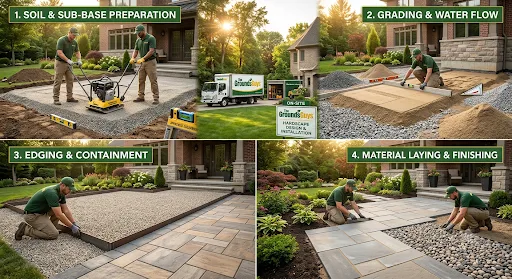
Whether you choose pavers, gravel, or concrete, proper installation is what separates a surface that lasts decades from one that shifts, cracks, or drains poorly.
A professional hardscape assessment and installation typically evaluates:
- Soil and sub-base conditions: Proper compaction and drainage beneath the surface are critical to long-term performance.
- Grading and water flow: Surfaces must be pitched away from structures to prevent pooling and water intrusion.
- Edging and containment: Yard and garden edging is important for gravel, which migrates without defined borders.
- Material compatibility: Matching the surface material to the intended use, load, and aesthetic of the property.
The Grounds Guys® provides professional hardscape design and installation, gravel installation, and landscape planning services tailored to your property, goals, and local conditions. Our team arrives on time, in uniform, with well-maintained equipment, and we leave your property better than we found it.
Ready to Upgrade Your Outdoor Space with Hardscaping?
Whether you're envisioning a beautifully laid paver patio, a low-maintenance gravel garden, or a clean concrete surface, The Grounds Guys can help you design and install the right hardscape for your property.
Our experienced service professionals work with homeowners and commercial property managers across the United States to create outdoor spaces that are both functional and beautiful.
Contact your local The Grounds Guys to schedule your appointment and request an estimate for hardscape installation or landscape planning services.
This article is intended for general informational purposes only and may not be applicable to every situation. You are responsible for determining the proper course of action for your home and property. The Grounds Guys® is not responsible for any damages that occur as a result of this blog content or your actions. For the most accurate guidance, contact The Grounds Guys® location nearest you for a comprehensive, on-site assessment.
The author generated images using OpenAI’s large-scale language-generation model. Upon generating images, the author reviewed, edited, and revised the images to align with Neighborly® standards and guidelines.
Frequently Asked Questions (FAQs) About Choosing the Right Hardscaping
As an industry leader, The Grounds Guys are committed to using our 20 plus years of landscape knowledge and experience to help homeowners and businesses bring the vision for their property to life. This includes answering your questions about landscape services. Below are answers to some of the most frequently asked questions about choosing the right hardscape for your property: patio pavers, gravel, and concrete.