


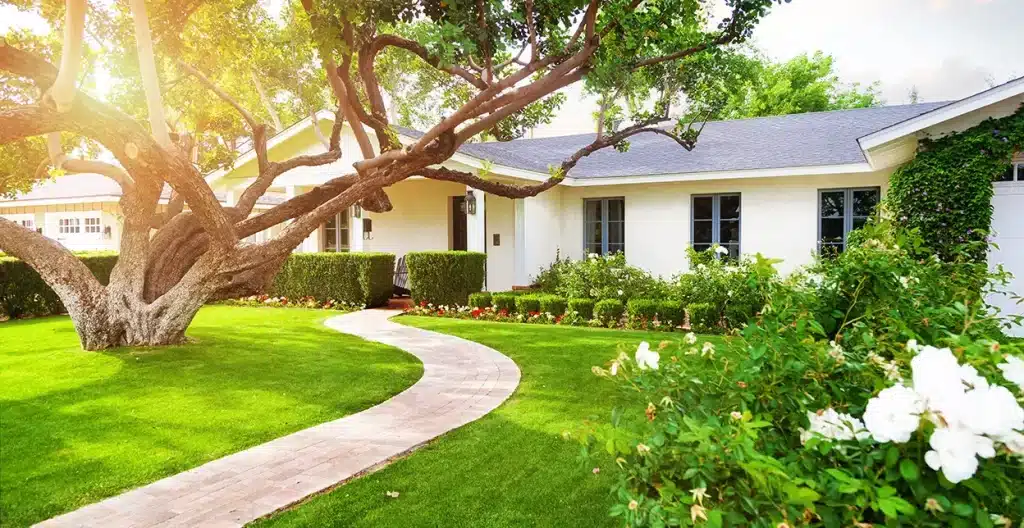
Trees are valuable parts of a residential landscape. They provide shade, create privacy, soften the appearance of buildings, and offer a sense of maturity that newly planted gardens cannot immediately reproduce. The challenge is recognizing when their growth starts interfering with the way a property functions.
Thoughtful tree trimming and removal can help homeowners address these changes while preserving the benefits of healthy trees wherever possible. The right decision depends on the tree’s condition, its location, the surrounding landscape, and the activities the yard needs to support. Rather than treating every overgrown tree as a problem, homeowners can assess individual needs and make practical improvements that keep outdoor spaces attractive, comfortable, and usable.
Recognizing When Tree Growth Becomes a Yard Problem
A patio that once received morning sunlight may remain shaded for most of the day. A basketball hoop may become obstructed by low branches, or a garden path may require frequent clearing after windy weather. These are signs that the existing landscape may need attention.
The first step is to identify the specific problem rather than assuming the entire tree needs to be removed. A few carefully selected pruning cuts may restore clearance, improve access, or allow more light through the canopy. In other cases, the tree’s condition or position may make a more substantial intervention necessary.
Changes in sunlight and garden conditions
Dense tree canopies can reduce the amount of sunlight reaching lawns, flower beds, vegetable gardens, and outdoor seating areas. Some plants tolerate shade well, but others may grow poorly when light levels become unsuitable for their needs.Before changing a tree, observe the yard at different times of day. Notice which areas receive direct sunlight, where moisture lingers, and whether plants near the tree appear stressed. This helps distinguish a genuine light problem from issues involving soil, watering, or plant selection.
Restricted access and everyday movement
Low branches can interfere with walkways, driveways, entrances, and play areas. Branches extending over a roof or touching exterior walls may also create maintenance concerns. Even when these issues do not present an immediate danger, they can make the property harder to use.Consider how people move through the space. If someone must duck beneath a branch to reach a garden bench or regularly step around fallen twigs, the tree may need professional assessment and appropriate pruning.
Understanding Which Areas Need More Space
Outdoor seating and entertaining areas
A comfortable seating area needs enough room for furniture, movement, and access. Branches hanging directly above a dining table may drop leaves, seed pods, or small twigs onto the surface. Dense foliage may also limit natural light, making the area less appealing during cooler months.The goal is not necessarily to create a completely open patio. Partial shade can be valuable during hot weather, particularly in exposed outdoor spaces. Selective canopy pruning may create a better balance between sunlight and shade without eliminating the tree’s contribution to the landscape.
Lawns, garden beds, and planting areas
Trees compete with nearby plants for water, nutrients, and growing space. The degree of competition varies according to tree species, soil conditions, root distribution, and the plants growing underneath.Instead of immediately removing the tree, consider whether the garden layout can be adapted. Shade-tolerant plants, mulch applied correctly, or a redesigned planting bed may provide a better result. Avoid raising soil levels or cutting large roots simply to accommodate new landscaping, because either action can damage a tree.
Choosing the Right Response for an Overgrown Tree
Tree trimming and removal decisions are best approached as an assessment rather than a quick cosmetic fix. A qualified arborist can inspect the canopy, trunk, root area, and surrounding conditions before recommending work.
Signs that pruning may be sufficient
Pruning is often appropriate when the tree is generally healthy but has branches that obstruct movement, interfere with structures, or create an unnecessarily dense canopy. Selective cuts can improve clearance and help maintain the tree’s natural form.A professional should identify suitable branches and avoid excessive cutting. Removing too much live foliage at once can stress a tree, expose previously shaded bark to intense sunlight, and affect its ability to maintain healthy growth.
The following situations may indicate that targeted pruning is worth discussing with a professional:
- Lower branches obstructing established walkways, driveways, or seating areas.
- Dead, damaged, or crossing branches that require assessment.
- Portions of the canopy extending toward a roof or interfering with necessary access.
- Dense growth that could benefit from selective thinning, where appropriate for the species.
When removal deserves consideration
Removal may be appropriate when a tree is dead, has serious structural defects, suffers from certain advanced diseases, or presents an unacceptable risk that cannot reasonably be managed through pruning or other measures. Its position may also conflict with essential property access or a planned improvement, although alternatives should be evaluated first.A leaning trunk alone does not prove that a tree must come down. Some trees naturally grow at an angle, while others develop concerning changes after root damage, soil movement, or storms. New cracks, lifted soil around the root plate, major trunk splits, or hanging broken limbs warrant prompt professional attention.
When a tree is near a home, power line, or frequently used area, do not attempt hazardous cutting yourself. Contact a qualified tree-care professional, and notify the relevant utility provider if electrical lines are involved.
Planning Yard Improvements Around Existing Trees
A homeowner who wants to install a larger patio, for example, should assess the mature size of nearby trees before choosing the patio’s dimensions. Similarly, a family planning a play area should consider overhead branches, root zones, and the amount of clear space needed for safe movement.
Protecting the character of the landscape
Mature trees often contribute to a property’s identity. Their canopies frame the house, provide visual balance, and create natural transitions between different garden areas. Removing a prominent tree can change the appearance of the entire property, particularly when it has been part of the landscape for many years.Before making a final decision, consider whether selective pruning, relocating a proposed feature, or adjusting the planting scheme could achieve the desired result. Where removal is necessary, replacement planting may help restore greenery over time.
Choose replacement trees according to the available space, local climate, soil conditions, and expected mature size. A tree that fits comfortably in a young garden may eventually become unsuitable if planted too close to buildings or paved areas.
Comparing common tree-care options
The following table outlines common situations and the responses a homeowner might discuss with a qualified professional.| Yard concern | Possible response | Important consideration |
| Branches obstruct a walkway | Selective pruning | Maintain suitable clearance without removing excessive foliage |
| Dense canopy limits garden light | Assess canopy structure and prune where appropriate | Preserve healthy branches and natural form |
| Dead or damaged limbs | Professional inspection and targeted removal | Assess whether damage extends into major limbs or the trunk |
| Tree shows signs of root movement | Prompt arborist assessment | Check for soil lifting, recent changes, and structural instability |
| Tree is severely declining or structurally compromised | Evaluate removal and alternatives | Consider risk, tree condition, and the surrounding property |
| Planned construction overlaps the root zone | Revise the layout or obtain specialist advice | Protect roots before excavation or paving begins |
Preparing the Yard Before Tree Work Begins
Tree trimming and removal projects may involve heavy branches, equipment, falling debris, and access restrictions. Even routine work can affect lawns, garden borders, fences, and nearby structures if the site has not been prepared properly.
A practical preparation checklist
Walk around the property with the proposed work in mind. Photograph the areas that concern you, note nearby structures, and decide which landscape features must be protected. Share this information with the contractor during the initial assessment.- Move portable furniture, garden tools, children’s toys, and decorative objects away from the work zone.
- Identify underground irrigation lines, outdoor lighting cables, and other features that could be affected by equipment.
- Discuss access routes, debris removal, stump treatment, and protection for lawns or planting beds before work begins.
- Keep children and pets away from the work area until the contractor confirms it is safe to return.
It is also useful to agree on the expected finish. Some homeowners want every branch and piece of debris removed, while others may wish to retain suitable wood for firewood or use chipped material as mulch where appropriate. Clarifying these preferences in advance helps avoid misunderstandings.
Restoring the Yard After Tree Work
Avoid rushing to fill every newly opened space. Observe the area over several weeks and note how sunlight moves across it. Soil moisture and temperature may change after canopy removal, affecting which plants will thrive.
Reassessing grass and garden beds
If a lawn has struggled beneath dense shade, increased sunlight may support better grass growth, provided the soil and watering conditions are also suitable. However, bare patches can result from compaction, poor drainage, or root competition, so simply adding seed may not solve the underlying problem.Where a tree has been removed, the remaining stump and roots can influence future planting. Ask about suitable stump removal methods before installing paving, building structures, or planting a new tree nearby. Grinding a stump does not remove every root, and the remaining material may gradually decompose.
Consider planting ground covers or shade-tolerant species in areas that remain shaded. In newly exposed locations, select plants that can handle the actual light and moisture conditions rather than choosing solely for appearance.
Creating a manageable long-term maintenance plan
A yard does not need to be completely redesigned to become more useful. Small, well-planned improvements can make outdoor spaces easier to maintain and more comfortable for everyday activities.- Inspect trees periodically for dead limbs, unusual canopy changes, damaged bark, or signs of root disturbance.
- Keep pathways, entrances, and frequently used outdoor areas clear as branches grow.
- Review planting beds, irrigation, and lawn conditions after significant changes to the tree canopy.
The aim is to maintain a landscape that can change naturally without allowing avoidable problems to accumulate. A thoughtful maintenance plan also helps homeowners identify concerns early, when a smaller intervention may still be appropriate.
Conclusion
Successful Tree Trimming and Removal planning starts with understanding the property’s needs, assessing the tree’s health, and choosing an appropriate response. Selective pruning may restore access and improve light, while removal may be necessary when a tree’s condition or location creates a problem that cannot reasonably be managed another way.
Once the work is complete, thoughtful planting, careful landscape adjustments, and periodic inspections can help the yard remain functional as trees continue to grow. The best outcome is not simply a tidier garden, but an outdoor space that supports everyday life while preserving as much healthy greenery as practical.
Frequently Asked Questions
Size alone does not determine whether a tree is unsuitable. Consider its distance from buildings, available growing space, canopy spread, root conditions, and how it affects daily activities. An arborist can help determine whether pruning or another solution would address the problem.
Pruning is often preferable when the tree is healthy and the concern can be resolved by removing selected branches. Removal may be justified when the tree is dead, seriously compromised, or unsuitable for its location. The decision should follow an assessment of its condition and potential risks.
It can, if insufficient sunlight is a major cause of poor grass growth. However, soil compaction, drainage, watering, and root competition may also contribute. After changing the canopy, assess the lawn’s growing conditions before deciding whether to reseed or replace the grass.
The appropriate timing depends on the tree species, its condition, local climate, and the type of work required. Some pruning can be planned during suitable dormant periods, while damaged or hazardous branches may need prompt attention. A qualified arborist can recommend suitable timing for the specific tree.
First, address any remaining stump, damaged ground, or debris. Then evaluate sunlight, soil conditions, and drainage before planting or installing new features. Replacement trees, shrubs, ground covers, or a redesigned seating area can help restore balance to the landscape.

Let Us Call You
Thank you for contacting us!

Searching through dozens of home and commercial service providers is a thing of the past. Rely on Neighborly’s national network of trusted, local service professionals for all your home and commercial service needs.
 App Store
 Google Play Store