|
Small irrigation problems like a tilted sprinkler head, a slow drip line leak, or a controller running the wrong schedule can damage your landscape long before they're obvious. Because irrigation systems run automatically, even minor issues repeat every watering cycle, wasting water and stressing your lawn. Over time, a small misaligned sprinkler or leaking emitter can lead to soggy areas, dry patches, runoff, root damage, fungal growth, or an unexplained increase in your water bill. Walk your irrigation system while it's running once a month to help you spot many of these problems before they become expensive repairs. |
The damage isn’t always obvious at first. A wet spot looks like a puddle. Brown grass looks like heat stress. A high water bill looks like normal seasonal use. But once you know what to watch for, the signs are easier to catch, and catching them early makes a real difference in what repairs cost. After working with homeowners for years, we have found that fixing small irrigation problems doesn't just protect your lawn, but also reduces unnecessary water use and improves irrigation efficiency throughout the growing season.
| Symptom | What It Usually Means | What Can Happen |
| Soggy patches that won't dry | Overwatering or poor drainage | Root rot, fungal disease, pest attraction |
| Runoff onto driveways or hardscape | Too much pressure, wrong nozzle, or poor head placement | Water waste, surface staining, slip hazards |
| Dry patches or dead zones | Coverage gap, clogged head, or failed zone | Lawn stress, bare spots, soil hardening |
| Tilted or misaligned heads | Ground shift, mower strike, or settling soil | Uneven coverage, water on structures or hardscape |
| Bubbling or seeping at the surface | Underground pipe, fitting, or valve leak | Soil erosion, sinkholes, landscape damage |
| Unexplained water bill increase | Hidden leak or inefficient schedule | Wasted water, higher costs, not yet visible damage |
| Cracked or disconnected drip lines | Age, UV exposure, animal damage, or root pressure | Dry planting beds, root stress, plant loss |
Soggy Patches That Won't Dry Out
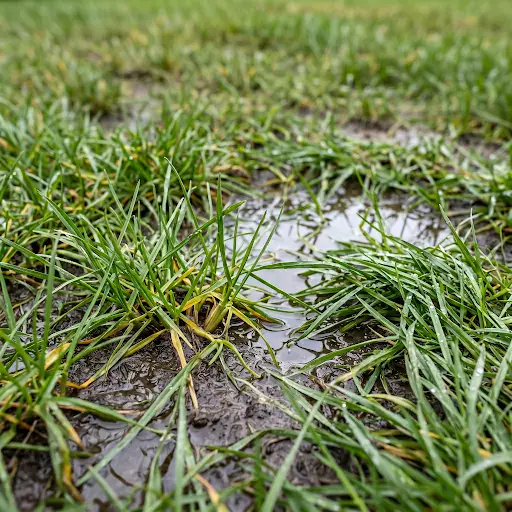
If part of your lawn stays wet for hours or days after watering, that's cause for concern. Consistently saturated soil drives oxygen out of the root zone, which weakens turf and makes it vulnerable to disease.
Overwatering is the most common cause, but soggy patches can also point to a sprinkler zone that isn't shutting off properly, a valve that isn't closing all the way, coverage gaps from the original sprinkler installation, or poor drainage in the soil beneath the surface. The problem repeats every cycle until something changes.
Wet areas that persist attract pests, including mosquitoes, grubs, and fungal pathogens that thrive in damp conditions. In cool weather, they can freeze and heave, damaging soil structure and root systems.
If a soggy area isn't responding to watering schedule adjustments, it's worth having a professional look at the zone and the surrounding drainage to find out why the water isn't moving.
Because several irrigation issues can produce similar symptoms, a professional irrigation inspection can help identify the underlying cause before additional lawn damage occurs.
Runoff Onto Driveways, Sidewalks, or Hardscape
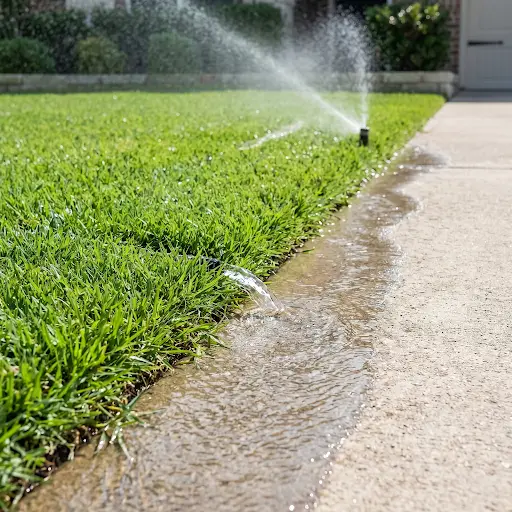
One pattern that we have observed is that water sheeting off your lawn and onto pavement is often a sign that your system is delivering more water than the soil can absorb, or delivering it in the wrong direction.
Runoff happens when water pressure is too high for the nozzles installed, when spray patterns are aimed toward hardscape surfaces, or when heads are placed close to edges without enough buffer. It can also result from a watering schedule that runs zones too long without giving the soil time to absorb between cycles.
Beyond wasting water, runoff carries fertilizer and soil particulates onto driveways and sidewalks, staining surfaces over time. On slopes, it accelerates erosion and can undermine the soil base beneath your hardscape.
A sprinkler repair or diagnostic visit can often resolve the issue by adjusting head placement, spray patterns, or run times can often resolve the issue without replacing major components.
Dry Patches and Zones That Won't Green Up

A strip of grass that stays brown while the rest of the lawn recovers is almost always a coverage problem rather than a simple watering issue.
The cause could be a clogged nozzle restricting output in one direction, a head that's sunk below the turf line and spraying into the ground, a watering zone that's lost pressure, or a gap in coverage from the original irrigation installation. Any of these scenarios create a consistently dry area that accumulates stress with every irrigation cycle.
Dry soil compacts over time, which makes it harder for water to penetrate even when coverage is restored. Roots in compacted zones lose access to water and nutrients, and grass thins out. What starts as a cosmetic problem can complicate routine lawn maintenance and eventually turn into bare soil that needs reseeding or resodding to recover.
If adjusting your watering schedule doesn't solve the problem, a service professional can inspect the system for pressure issues, clogged nozzles, or damaged components.
Tilted, Sunken, or Misaligned Sprinkler Heads
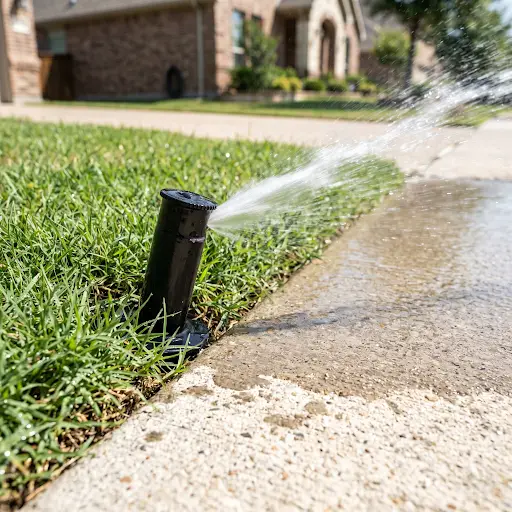
Sprinkler heads shift over time. Foot traffic, mower wheels, ground settling, and freeze-thaw cycles all move them gradually out of position.
A head that's tilted even slightly can redirect water toward a fence, foundation, structure, or driveway instead of the lawn. A head that's sunk below the turf line pops up into the soil instead of above it, watering the ground directly around the head while leaving everything else dry. A head positioned too high is vulnerable to mower damage, which can crack the housing and create a leak.
These are easy problems for a homeowner to miss because the system still runs. Water is still coming out. Everything looks operational from a distance. But coverage is quietly deteriorating with each cycle, and water is consistently landing somewhere it shouldn't.
Head alignment is one of the things a professional checks during a routine system inspection and is often correctable without replacing parts.
Bubbling or Seeping Water at the Surface
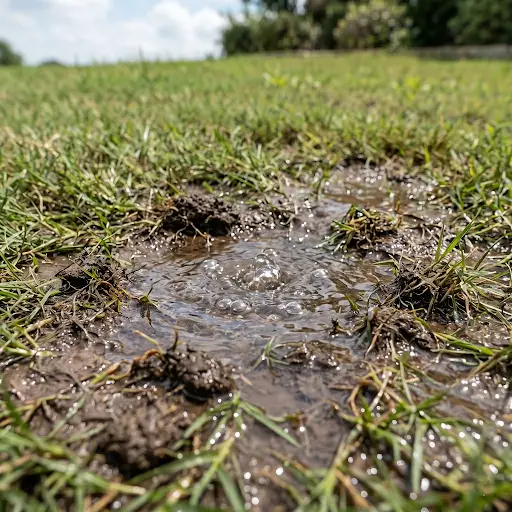
If you see water bubbling up from the ground during a watering cycle, there's likely a break or a loose connection somewhere in the pipe underground, while bubbling after the zone has been shut off is more commonly the lines draining to the lowest point. It is important to know which it is.
In the field, we regularly see that underground leaks don't announce themselves clearly. It’s easy to dismiss: a soft spot in the lawn, a patch of unusually green grass in an otherwise dry area, or slight pooling near a valve box. By the time you see bubbling at the surface, the leak has usually been underway long enough to saturate the surrounding soil.
Sustained underground leaks erode soil, wash away the material that stabilizes your lawn's root zone, and in some cases create voids beneath the surface. Over time, that can mean sinkholes, settling near walkways or structures, or significant landscape damage that goes well beyond the cost of the original repair.
Underground leaks should be assessed by a professional as soon as they're suspected. Drainage repair or addition may be needed alongside irrigation repairs if the surrounding soil has been significantly affected.
A Water Bill That Keeps Going Up
If your water usage is creeping up without any obvious reason, your irrigation system is one of the first places to look.
In many cases, we have seen a slow underground leak, a valve that isn't closing completely, or a controller running zones longer than intended can each add hundreds of gallons per month without producing any obvious visible symptoms. Drip systems are especially prone to this because small line cracks or disconnected emitters release water slowly, at ground level, where it's hard to see.
Higher water bills are often the first sign of a problem that's been building for a while. By the time the bill is noticeably high, the system has likely been running inefficiently through multiple billing cycles.
Scheduling an irrigation maintenance check gives a professional the chance to run each zone, review the controller settings, and look for the kind of inefficiencies that don't show up until they appear on a bill.
Cracked or Disconnected Drip Lines
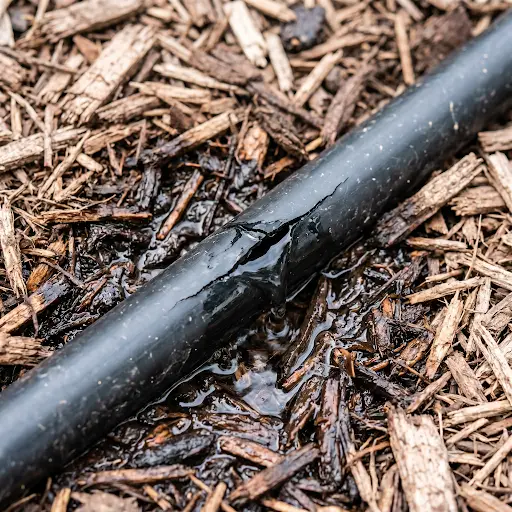
Drip irrigation is designed to deliver water slowly and directly to plant root zones, which makes it highly efficient yet easy to overlook.
Drip lines crack with age, UV exposure, and temperature swings. They get pushed out of position by root growth, disturbed during planting or mulching, or chewed through by animals. When a line breaks or disconnects, water either pools in one spot or stops reaching the plants it was designed to feed, and the failure can be hard to see under mulch or ground cover.
Plants watered by a failed drip line experience gradual stress that can look like a watering schedule issue or a soil problem. Over time, chronic underwatering damages root systems and can kill established plants and shrubs that take years to grow.
Drip lines are worth inspecting visually at the start of each season as part of seasonal landscape maintenance, especially in beds where plants are densely planted or mulch covers the lines. If a bed looks dry despite running normally, the line is the first thing to check.
Don't Wait for a Small Problem to Become an Expensive One
If you've noticed soggy patches, dry spots, runoff, or a higher-than-normal water bill, don't wait for the damage to spread. The Grounds Guys® can inspect your irrigation system, identify the underlying cause of the problem, and recommend the right repair before a small issue becomes a costly one. Every service is backed by the Neighborly Done Right Promise®, a commitment to getting every job done right.
This article is intended for general informational purposes only and may not be applicable to every situation. You are responsible for determining the proper course of action for your home and property. The Grounds Guys are not responsible for any damages that occur as a result of this blog content or your actions. For the most accurate guidance, contact The Grounds Guys location nearest you for a comprehensive, on-site assessment.
Frequently Asked Questions About Irrigation Problems
As an industry leader, The Grounds Guys are committed to using our 20+ years of landscape knowledge and experience to help bring the vision for their property to life. This includes answering your questions about landscape and lawn care services. Below are answers to some of the most frequently asked questions about small irrigation problems.
This blog post may contain content, images, and/or multimedia generated with the assistance of artificial intelligence (AI). While every effort has been made to review, edit, and ensure accuracy, completeness, and alignment with our brand standards, we encourage readers to verify facts, consult trusted professionals, and use their own judgment when making decisions based on this content.