Yes, DIY irrigation repair can create bigger problems when a visible symptom is mistaken for the actual cause.The biggest issue is often the extra time, effort, and money spent to fix the problem yourself. Especially, if you don’t have a good understanding of your system. DIY fixes that don’t resolve the issue only lengthens the time the area isn’t being watered or isn’t being watered properly. This can lead to additional plant or turf replacement or rehabilitation costs. The Grounds Guys local pro has everything that is needed to diagnose, and if necessary, repair the problem the first time. A dry patch, broken sprinkler head, weak spray, or wet spot may be connected to other parts of the system, including valves, wiring, pressure, controllers, or underground lines.
|
Why a Simple Irrigation Repair Can Get Complicated Fast
A DIY irrigation repair can look simple when the problem is right in front of you. A sprinkler head is cracked. One area of the lawn looks dry. Water is pooling where it should not be. From the surface, it can seem like one part failed and one quick repair should solve it.
A lush, green lawn can make an irrigation system look simple. In reality, most of the action happens below the surface. Whether you have traditional sprinklers or a drip irrigation system, a network of pipes, valves, controllers, wiring, and irrigation zones work together to deliver water where it’s needed. When one piece is off, the effects can show up somewhere else entirely.
That’s the sneaky thing about irrigation repairs. The problem you see first is not always the actual problem. Low pressure, a valve issue, damaged wiring, or an underground leak can all show up in similar ways above ground. That makes it easy to focus on fixing what you can see while missing what’s actually causing the problem.
The Yard May Be Showing You the Symptom, Not the Cause
An irrigation issue may show up in one place, even when the cause is somewhere else in the system. A dry patch, soggy spot, weak spray, or sprinkler zone that will not run can point to several possible problems, not just the part you noticed first.
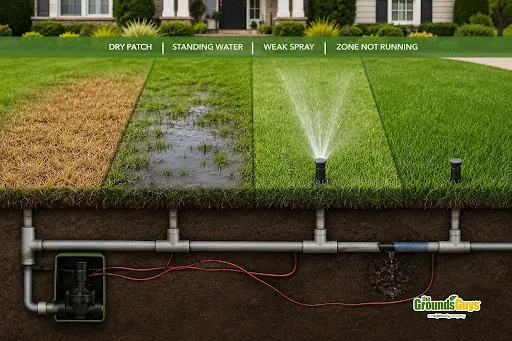
The same symptom can be connected to several different irrigation issues:
| What Symptom You Notice | What Could Be The Cause |
|---|---|
| Dry patch in the lawn | Low pressure, blocked or broken head, poor coverage |
| Water pooling in one area | Broken sprinkler head, leaking line, drainage issue, or valve problem |
| One sprinkler zone not working | Controller, wiring, valve, or pressure issue |
| Weak spray from sprinkler heads | Clogged head, pressure issue, leak, or system imbalance |
| Uneven watering | Incorrect head placement, mismatched nozzles or heads, pressure issue, or poor zone setup |
The symptom matters, but it shouldn’t be the only thing you look at. If you base the fix only on what you can see, the original issue can fester … and so can the extra time, cost, and frustration that comes with having to try the repair again.
How DIY Irrigation Repair Can Make Things Worse
DIY irrigation repair can make things worse when a quick fix does not match the real cause of the problem. The repair may target the wrong part, disturb hidden components, change the watering pattern, or temporarily cover up an issue that still needs attention.
It would be nice if every irrigation problem were a fix-it-and-forget-it situation. A cracked sprinkler head, a wet patch, or one dry stretch of lawn can make the solution feel like common sense.
But irrigation systems aren’t always that straightforward. When you base the repair on what you can see instead of what is actually causing the problem… the repair may not solve the issue and could create additional ones.
Replacing the wrong part
Sometimes the part that looks broken is only the first piece of the problem. Once fixed, it may reveal other issues that need to be addressed in order to fix the problem as a whole.
A cracked sprinkler head may seem pretty simple to fix yourself, but the actual issue could involve factors like water pressure, a valve, a leak, or another part of the system. So, replacing the visible part is a great first step, but it may not always solve the problem—leaving you wondering why the same problem keeps coming up. A professional tech will likely notice the additional problems while on site, affecting or scheduling the repair immediately so the recovery time of your landscape will be shorter.
Disturbing underground pipes or wiring
Disturbing underground pipes or wiring can turn one irrigation issue into several.
This happens a lot during those repairs that seem straightforward: replacing a sprinkler head, digging near a wet spot, working around a valve box, or trying to expose a buried line.
Irrigation lines and control wires are not always easy to spot from the surface, if at all. So, if something gets loosened, nicked, or shifted, your irrigation system may end up developing a new leak, lose pressure, or stop running in a zone correctly. And suddenly, just like that, your original issue may become more complicated.
Accidentally changing the spray pattern
A DIY sprinkler repair can create uneven watering if the replacement head or nozzle does not match the zone’s pressure, spray distance, arc, or coverage needs.
For example, a sprinkler head or nozzle may look identical, but its spray pattern might be longer or shorter, its coverage could be at a greater or lesser angle, or the flow rate could be different. Any of these could cause gaps in watering that may take time to reveal themselves. That small change can leave one part of the lawn too wet while another stays too dry.
Over time, that can lead to pooling, runoff, brown patches, or uneven growth which, ultimately, makes it harder to tell whether the issue is new or connected to the original repair.
Treating the symptom instead of the cause
A DIY irrigation repair can seem successful at first, only for the same problem to show up again a few days or weeks later.
This happens when the repair only addresses the visible symptom instead of the root cause. A dry patch may disappear for a while. A sprinkler head may start spraying again. But if the underlying issue involves a valve, pressure problem, leak, or another part of the system, the original problem may still be there.
Sometimes the biggest indicator that something is wrong is when the same issue keeps coming back again and again.
So, before starting another repair, it helps to know which types of irrigation issues deserve a little extra TLC.
Irrigation Repairs Homeowners Should Be Careful With
Some irrigation repairs are more likely to create bigger problems if the cause is unclear. Before starting a repair, it may be worth pausing if the issue involves:
- Digging near buried irrigation lines
- Working around valve boxes
- Troubleshooting wiring or controller issues
- Replacing parts when water pressure or coverage is unknown
- Repairing a leak that keeps coming back
These situations do not always mean a major repair is needed. They do mean the next step should be based on a clearer understanding of what is causing the problem, which is exactly where an irrigation inspection can help.
Why an Irrigation Inspection Matters as Part of Your Repair
An irrigation inspection helps create a clearer picture of the issue that needs to be solved and the best approach to do so, therefore saving guesswork and additional expenditure.
An irrigation inspection helps identify what is actually causing the problem. That, above all, is the real value of an inspection: it helps take the guesswork out of the repair. A dry patch, wet spot, weak spray, or broken head may be the first sign that something needs attention, but an inspection can help show what your system actually needs before the repair begins.
A professional irrigation inspection can help:
- Identify the likely cause before repairs begin
- Check for hidden leaks, pressure issues, valve problems, or wiring concerns
- Evaluate how water is moving through different zones
- Confirm whether the visible issue is part of a larger system problem
- Reduce the chance of repeat repairs for the same issue
In a lot of cases, the inspection is what turns the repair from a guessing game into a clear game plan. Sometimes the smartest fix starts before the tools come out.
Get to the Root Cause with The Grounds Guys
When your irrigation system starts showing signs of trouble, the goal is not just to fix the visible problem. It is to understand why the problem is happening and choose the right repair. The Grounds Guys can inspect your irrigation system, check for issues that may involve sprinkler heads, valves, pressure, wiring, controllers, leaks, or zones, and recommend the next step through our irrigation repair services.
If the same irrigation issue keeps coming back or you are not sure what is causing it, contact your local The Grounds Guys to schedule service.
This article is intended for general guidance only and is not applicable to every situation. You are responsible for determining the proper course of action for your property and situation. The Grounds Guys are not responsible for any damages that occur as a result of advice and/or guidance derived from its blog content. The Grounds Guys services may vary by location. Contact The Grounds Guys franchise nearest you for more information.
Frequently Asked Questions About DIY Irrigation Repair
DIY irrigation repair isn’t always as simple as it looks from the surface. The Grounds Guys combines more than 20 years of landscape experience with practical irrigation expertise to help homeowners understand what may be happening throughout their system. Below are answers to common questions about DIY irrigation repair, inspection, and knowing when to call a professional.