


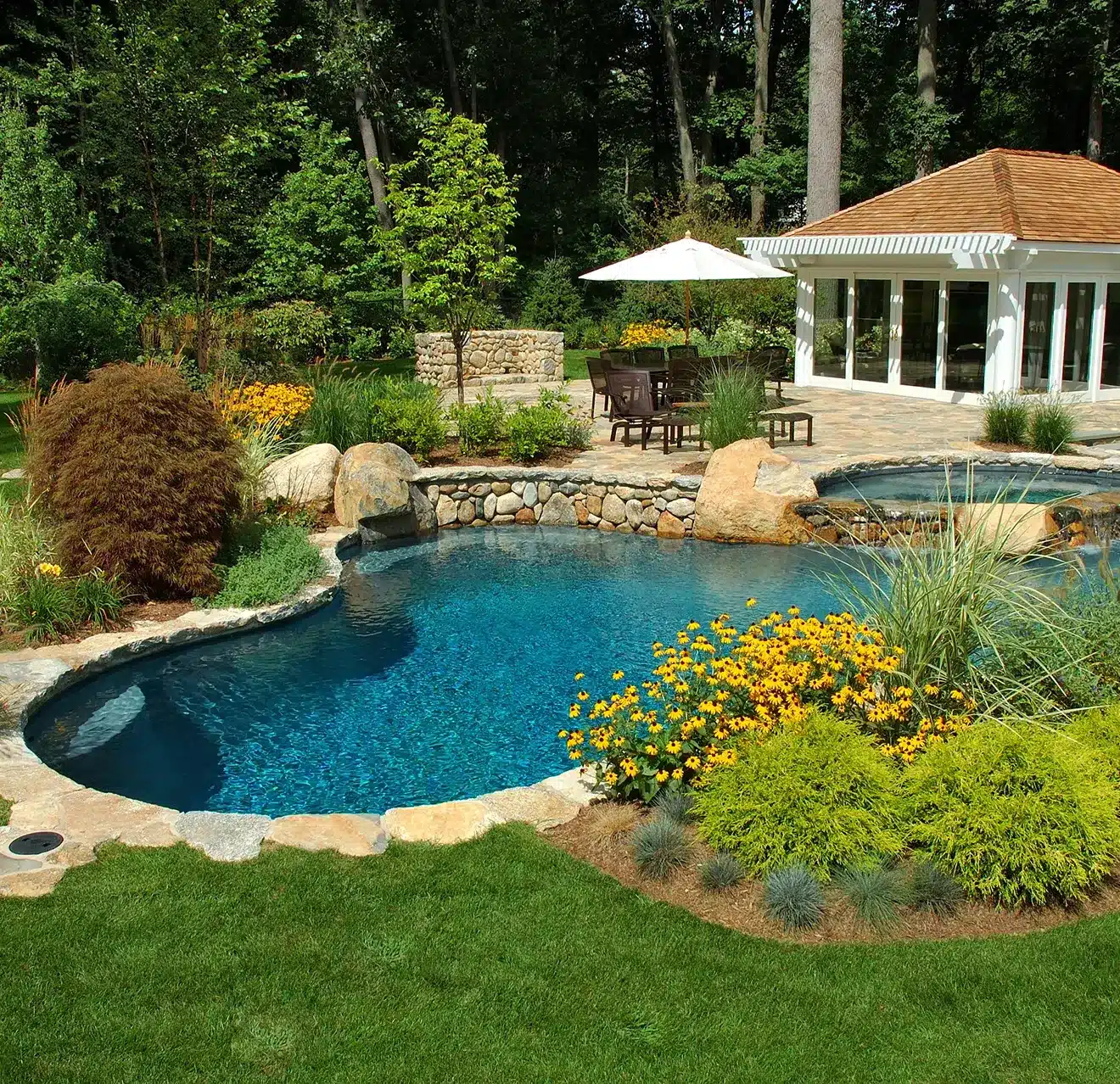
Start by Understanding the Space You Have
A basic property review should include:
- Areas of full sun and shade
- Existing trees and plants worth preserving
- Low spots and drainage concerns
- Current lawn condition
- Walkways, utilities, and access points
Decide What “More Valuable” Means for Your Yard
Build Around Everyday Use
A backyard that looks beautiful but has nowhere comfortable to sit may not get much use. On the other hand, a simple patio surrounded by shade and attractive planting can become one of the most frequently used parts of a home.Consider whether the property would benefit from:
- A dedicated dining or seating area
- More open lawn for children or pets
- Shade near frequently used outdoor spaces
- Screening from neighboring properties
- A clearer connection between the house and backyard
Create a Landscape with a Clear Structure
The front yard might focus on the entrance and curb appeal. The backyard can be more relaxed and centered around recreation or entertaining. Side yards may provide access, screening, or practical storage space.
This approach also prevents the landscape from becoming visually cluttered. A few well-defined areas can often have a stronger impact than many disconnected features.
Choose Plants That Suit Little Elm Conditions
When choosing plants, consider:
- How much sunlight the area receives
- Soil moisture and drainage
- Mature plant size
- Seasonal appearance
- Water and maintenance requirements
Think About the Future Size of Plants
One of the most common mistakes in residential landscaping is planting without considering mature growth. A small shrub can look perfectly placed when first installed but may eventually cover windows, block paths, or crowd other plants. Leave adequate space between plants and structures. The landscape may look slightly open during the first season, but that space can disappear naturally as plants mature. Using a few repeated plant varieties can also create a more connected appearance. Repetition gives different sections of the yard a common visual thread without making everything look identical.Make the Lawn Work for the Property
For families who use the lawn for recreation, keeping a generous open area makes sense. In other yards, reducing unnecessary turf can create room for planting beds, seating, or other useful features.
The shape of the lawn matters too. Wide, accessible sections are generally easier to maintain than narrow strips surrounded by landscape beds.
Consider Sod Installation When the Lawn Needs a Fresh Start
Give New Sod the Right Start
New sod requires careful watering while its roots establish. The exact amount depends on weather, soil, and site conditions, so homeowners should pay attention to the lawn rather than following a rigid schedule without adjustment.Heavy foot traffic should also be limited during the early establishment period. Once the roots have developed, the lawn can gradually move into a normal maintenance routine.
Plan for Maintenance Before Adding More Features
For homeowners managing lawn care in Little Elm, routine mowing is only one part of maintaining an attractive property. Watering, fertilization, weed management, trimming, seasonal cleanup, and lawn health all play a role.
A practical maintenance plan can include:
- Regular mowing at an appropriate height
- Seasonal pruning of shrubs and trees
- Checking irrigation for coverage problems
- Monitoring weeds and bare areas
- Refreshing mulch when needed
Make Outdoor Living Areas Feel Connected
Use Hardscape Elements with a Purpose
Before adding hardscape, consider:
- Whether it solves a real problem
- How people will move around it
- How it will affect drainage
- How it will look beside mature plants
- How much maintenance it will require
Give Privacy a Natural Look
Trees, shrubs, and layered planting can create screening without making the yard feel closed in. The best choice depends on the available space and how much privacy is actually needed.
Avoid planting large numbers of fast-growing plants without considering their mature size. Rapid growth can eventually create overcrowding and increase trimming requirements.
Don’t Ignore Drainage
Address Water Problems Before Installation
Adding new plants on top of an existing drainage issue usually does not solve the underlying problem. Depending on the property, the solution may involve grading, improving soil conditions, redirecting runoff, or modifying how water leaves the property.For larger or persistent problems, getting professional advice before investing in new landscaping can save homeowners from repeating the same repairs.
Make Lawn Mowing Easy from the Beginning
Avoid These Common Landscaping Mistakes
Some mistakes homeowners should watch for include:
- Choosing plants without checking mature size
- Installing too much lawn for the available maintenance time
- Ignoring drainage problems
- Blocking access to utilities
- Mixing too many unrelated materials and plant varieties
Think About Long-Term Growth
When Professional Help Can Make Sense
Review the Landscape Before Work Begins
A final review should confirm:
- Plants have enough room to mature
- Lawn areas are easy to access
- Drainage concerns have been addressed
- Outdoor spaces are connected logically
- Maintenance requirements are realistic
Conclusion
A healthy lawn, suitable plants, thoughtful hardscaping, practical drainage, and well-planned outdoor areas can all contribute to a stronger overall landscape. Whether the project begins with Sod installation, a lawn improvement, new planting beds, or a complete redesign, the most important step is understanding how each element will work with the others.
When homeowners plan for both present needs and future growth, the yard can become more than a visual asset. It can become a comfortable, useful part of the home that continues to provide value long after the initial work is complete.
Frequently Asked Questions
Start with the property’s sunlight, soil, drainage, existing lawn, and how you plan to use the outdoor space. These details can guide plant selection and overall layout.
Sod can provide a fast way to create a more established lawn. Proper soil preparation, suitable turf selection, and careful watering are important for successful establishment.
Choose plants that suit the site, avoid overcrowding, keep lawn areas accessible, and use practical landscape shapes. A simpler design is often easier to maintain consistently.
Drainage is essential because standing water can damage turf, plants, and soil. Existing drainage concerns should be addressed before major landscaping features are installed.
Mowing frequency depends on grass growth, weather, and seasonal conditions. During periods of active growth, the lawn may need more frequent mowing.
Professional assistance can be useful for larger projects involving sod, grading, drainage, irrigation, extensive planting, or ongoing maintenance. Smaller improvements can often be handled independently.

Let Us Call You
Thank you for contacting us!

Searching through dozens of home and commercial service providers is a thing of the past. Rely on Neighborly’s national network of trusted, local service professionals for all your home and commercial service needs.
 App Store
 Google Play Store