


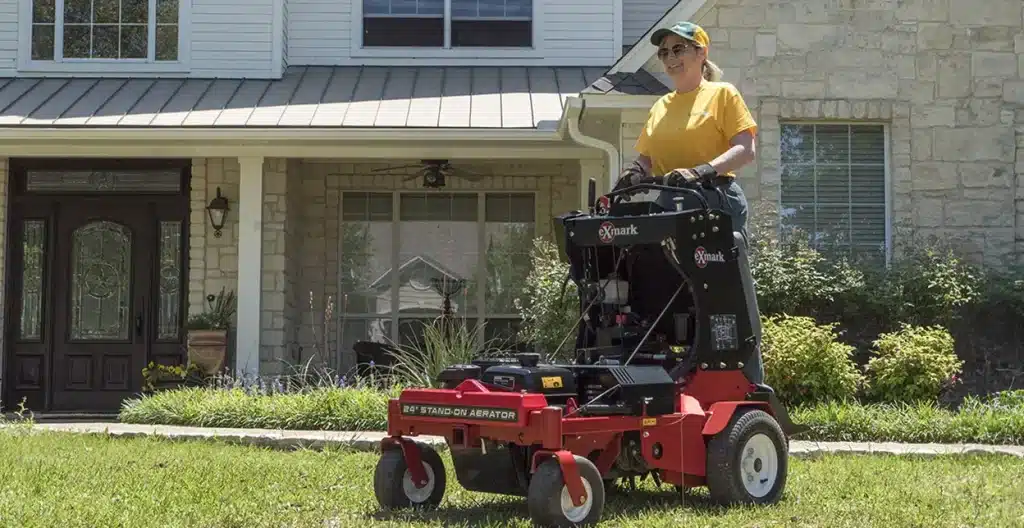
What Lawn Aeration Actually Does
Core aeration is one of the most common approaches. A machine removes small plugs of soil from the lawn instead of simply making holes in the surface. Those openings give the surrounding soil room to loosen and create better pathways toward the roots.
The benefit is not limited to appearance. A lawn with improved soil conditions can develop a stronger root system, use available moisture more effectively, and recover more easily from everyday stress.
Why Dallas Lawns Can Develop Compacted Soil
Dallas weather can add another layer to the challenge. Periods of heat and dry weather can make lawn maintenance more demanding, while heavy rain can affect already stressed soil. If water begins sitting on the surface instead of moving into the ground, compaction may be part of the problem.
Some common signs include:
- Water pooling or running across the surface after irrigation or rain
- Grass that looks thin even with regular maintenance
- Bare or weak areas where foot traffic is common
- Soil that feels unusually hard when you try to insert a garden tool
The Connection Between Aeration and Root Growth
Aeration creates openings that can make the root zone more accessible. As roots encounter less resistance, they have more opportunity to grow into surrounding soil rather than remaining concentrated near the surface.
This matters during stressful weather. A deeper and more established root system can give grass better access to moisture farther below the surface. It can also help the lawn recover when environmental conditions are less favorable.
Aeration is not a quick fix for every lawn problem, though. If the grass has poor drainage, unsuitable turf for the location, serious disease, or another underlying issue, those concerns may need to be addressed separately.
When Should Dallas Homeowners Consider Aeration?
Instead of putting aeration on an automatic calendar without looking at the yard, homeowners should consider how the lawn has behaved throughout the season.
For example, a lawn that receives heavy traffic may need attention sooner than a lightly used yard. Likewise, a property with dense clay-heavy soil may experience compaction differently from one with looser soil.
Before scheduling the work, consider:
- How heavily the lawn is used
- Whether water is penetrating the soil properly
- The type of turfgrass growing in the yard
- Whether the soil feels hard to penetrate
- How the lawn responded during the previous growing season
Preparing the Lawn Before Aeration
It is also worth identifying sprinkler heads, shallow irrigation lines, landscape lighting cables, and other features that could be affected by equipment.
A quick inspection before work can prevent avoidable problems. Look closely at areas that receive the most traffic because compaction is rarely distributed evenly across an entire property.
If one side of the yard is used as a regular walkway while another section is mostly decorative, the two areas may have completely different soil conditions.
What to Do After Lawn Aeration
This is also a useful time to review the broader maintenance routine. If the soil has been compacted because of repeated foot traffic, aeration may help relieve the immediate condition, but the same pressure can gradually return.
Good post-aeration care can include:
- Maintaining appropriate watering rather than constantly keeping the surface wet
- Following suitable mowing heights for the grass variety
- Monitoring areas that receive repeated foot traffic
- Applying nutrients based on actual lawn needs
- Watching for weeds or thinning areas during recovery
How Aeration Works with Lawn Fertilization
When compacted soil limits movement through the root zone, simply adding more fertilizer may not solve the underlying issue. The nutrients still need to reach the areas where grass roots can use them.
That is why it is useful to think about soil condition before automatically increasing fertilizer applications. A lawn that appears hungry may actually be dealing with poor root access, uneven watering, or compaction.
Nutrient applications should also be based on the grass type and its actual requirements. Applying excessive fertilizer does not necessarily produce a healthier lawn and can create additional maintenance concerns.
Different Parts of a Yard May Need Different Attention
The grass beside a driveway may experience heat and traffic, while an open backyard may have better growing conditions. Shaded areas may retain moisture longer, whereas exposed sections can dry out quickly.
Aeration can therefore be more valuable in specific high-stress areas. A professional assessment can help identify where compaction is concentrated instead of treating every problem as a simple surface issue.
This approach can also make future maintenance more efficient. Once homeowners understand why one section performs poorly, they can adjust watering, traffic patterns, mowing practices, or other maintenance habits accordingly.
Common Lawn Aeration Mistakes to Avoid
Another issue is expecting immediate visual transformation. Aeration works by improving conditions below the surface, and the lawn may need time to respond.
Homeowners should also avoid assuming that more aeration is always better. Excessive or poorly timed work can disturb a lawn unnecessarily.
A few mistakes worth avoiding are:
- Aerating when the soil is excessively wet
- Ignoring irrigation and utility features before using equipment
- Choosing a timing that does not suit the turfgrass
- Treating aeration as a replacement for regular lawn maintenance
- Applying fertilizer without considering the lawn’s actual nutrient needs
Building Aeration into a Long-Term Lawn Strategy
That makes aeration most useful when it is considered alongside regular mowing, appropriate irrigation, sensible fertilization, weed management, and observation.
Homeowners can also reduce future compaction by changing how certain parts of the property are used. If people regularly cross the same section of grass, creating a designated walkway may reduce pressure on the turf. Moving outdoor activities around can also prevent one small area from receiving constant traffic.
A long-term lawn strategy is less about doing more work and more about doing the right work at the right time.
How to Tell Whether the Lawn Is Improving
A lawn that previously developed puddles may begin absorbing water more evenly. Thin areas may gradually become denser as roots establish themselves in improved soil conditions.
Keep expectations realistic. Grass does not transform overnight, and weather can influence how quickly the lawn responds. Regular observation over several weeks gives a much better picture than judging the results immediately after the service.
It can also be useful to photograph problem areas before treatment. Comparing those areas later can make gradual improvements easier to recognize.
Conclusion
For Dallas homeowners, Dallas lawn aeration should be viewed as one part of a larger maintenance strategy rather than a one-time cure. When combined with sensible watering, appropriate mowing, balanced lawn fertilization, and attention to changing soil conditions, aeration can help create a lawn that is better prepared for everyday traffic and seasonal stress.
FAQs About Lawn Aeration
There is no universal schedule for every lawn. High-traffic yards and heavily compacted soils may benefit from more frequent attention, while lightly used lawns may require it less often.
Proper aeration is designed to improve the lawn rather than damage it. The temporary disruption allows the soil to open up and gives roots better access to air, water, and nutrients.
Yes, homeowners can rent or purchase aeration equipment, but the process requires proper timing and technique. Professional equipment may also be more practical for larger properties.
Aeration can complement a suitable fertilization plan because improved soil openings can help nutrients reach the root zone. However, fertilizer should be applied according to the lawn’s needs rather than automatically.
Yes, relieving compaction is one of the primary reasons lawns are aerated. Core aeration removes small plugs of soil and creates pathways that can improve movement through the root zone.
No. Aeration mainly addresses soil compaction and related root-zone limitations. Problems involving pests, disease, drainage, poor turf selection, or improper irrigation may require different solutions.

Let Us Call You
Thank you for contacting us!

Searching through dozens of home and commercial service providers is a thing of the past. Rely on Neighborly’s national network of trusted, local service professionals for all your home and commercial service needs.
 App Store
 Google Play Store