


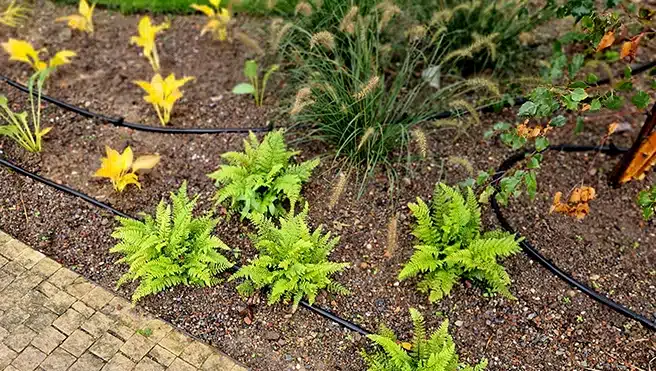
Whether you own a historic property in the M-Streets, a modern townhouse in Uptown, or an expansive estate in North Dallas, transitioning to a sustainable landscape architecture can dramatically decrease your utility bills, minimize maintenance hours, and elevate your property’s resale value.
The Shift Toward Sustainable Landscape Architecture
1. Xeriscaping and Resource Conservation
- Reducing Turf Grass: Swapping out large sections of water-guzzling Bermuda or St. Augustine grass for beautiful gravel walkways, native groundcovers, or river rock beds significantly lowers water dependencies.
- Permeable Surfaces: Using materials like decomposed granite, loose river rock, or unsealed flagstone allows rainwater to soak directly back into the ground, reducing urban runoff and filtering pollutants naturally.
2. Enhancing Urban Biodiversity
- Pollinator Gardens: Integrating nectar-rich perennials ensures your garden stays visually alive with activity.
- Vertical Greenery: For tight urban spaces, utilizing trellises with native climbing vines softens hard concrete walls while filtering air pollutants.
Essential LSI Plants for the Dallas Urban Ecosystem
| Botanical / Common Name | Eco-Benefit | Growth Habit | Ideal Placement |
| Turk’s Cap | High shade tolerance; attracts hummingbirds. | Bushy perennial with unique wrapped red petals. | Underneath large canopy trees or north-facing walls. |
| Salvia Greggii (Autumn Sage) | Blooms continuously from spring until the first hard freeze. | Small, woody shrub available in red, pink, or coral colors. | Sunny borders and along driveway walkways. |
| Mexican Feathergrass | Exceptional drought resistance and erosion control. | Soft, wispy green blades that shimmer in the wind. | Sloped areas or mass plantings in rock gardens. |
| Cedar Elm | Provides deep shade, reducing home cooling costs. | Large native canopy tree with excellent drought tolerance. | Street-side framing or central backyard focal point. |
Professional Execution in the Dallas Metroplex
When executing complex ecological designs, homeowners turn to The Grounds Guys of Dallas, Park Cities & Lakewood. Their local teams are highly trained in sustainable practices, specializing in native weed control, organic fertilization services, and precision irrigation management to keep urban landscapes flawless, compliant, and exceptionally green.
How to Transition Your Dallas Yard to a Sustainable Landscape
Step 1: Conduct a Site and Shade Analysis
Track the sun movement across your urban property. Identify high-heat reflection zones near concrete walls and deep shade areas created by neighboring buildings or large trees.Step 2: Remove or Reduce Existing Turf Grass
Sod cut or sheet-mulch the designated areas of your yard where high-water turf grass is no longer functional, preparing the base layer for hardscaping or gravel paths.Step 3: Install Permeable Hardscapes & Rock Beds
Lay down geotextile fabric to prevent weed growth, then build out your decomposed granite pathways, dry river rock beds, or permeable flagstone patios.Step 4: Plant Stratified Native Species & Mulch
Group your new native Texas plants by their specific water needs (hydrozoning). Install localized drip emitters, then cover all exposed soil with a 3-inch layer of organic cedar mulch.Soil Rehabilitation: Overcoming Dallas Black Heavy Clay
- The Problem: This clay holds water tightly when wet, cutting off oxygen to plant roots, and cracks open like concrete when dry, shearing delicate root systems apart.
- The Solution: Never plant directly into raw clay. Dig your beds wide, and blend in massive quantities of expanded shale and organic compost. The expanded shale permanently breaks apart the tight clay platelets, introducing permanent air pockets for root respiration, while compost feeds beneficial soil microbes.
Frequently Asked Questions (FAQs)
Xeriscaping is a sustainable landscaping practice focused on water conservation through the use of drought-tolerant native plants, reduced turf grass, and permeable rock or gravel bases. It helps Dallas homeowners cut outdoor water use by 50–70% and drastically reduce weekly lawn maintenance demands.
Yes, you can maintain a stunning urban garden by focusing on soil health. Utilizing organic compost, native shredded cedar mulch, and slow-release organic fertilizers feeds the natural soil microbiome, making your plants highly resilient to pests and diseases naturally.
The top native shade trees for Dallas are the Cedar Elm, Texas Red Oak, and Chinquapin Oak. These species feature incredibly deep root systems that will not disrupt nearby concrete foundations while providing massive canopies that cool your home during summer.

Let Us Call You
Thank you for contacting us!
Let Us Call You
Thank you for contacting us!

Searching through dozens of home and commercial service providers is a thing of the past. Rely on Neighborly’s national network of trusted, local service professionals for all your home and commercial service needs.
 App Store
 Google Play Store