


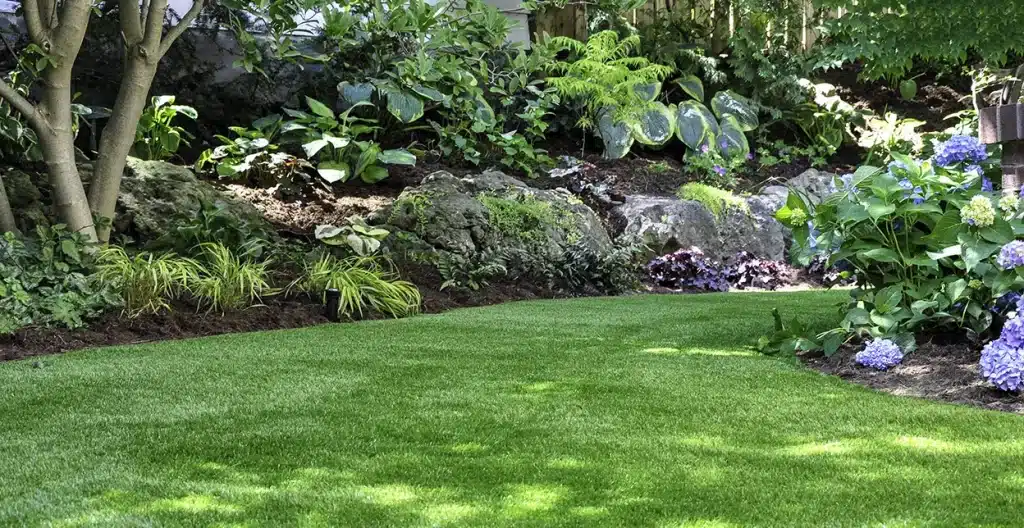
A successful landscape should complement the home, remain manageable through the seasons, and provide outdoor areas that feel natural to use. With the right approach, even modest improvements can make a noticeable difference.
Start with a Clear Understanding of the Property
A landscape plan that works well for one home may not be suitable for another. A heavily shaded backyard, for example, may require a different lawn and planting strategy than an open area exposed to sunlight for most of the day.
A useful starting assessment should include:
- Areas that receive full sun and deep shade
- Existing drainage issues or places where water collects
- The condition of current grass and planting beds
- Mature trees and their surrounding root zones
- How residents currently move through and use the yard
Plan Outdoor Areas Around How the Home Is Used
A small area beside the house could become a comfortable seating spot. An open lawn might provide room for children or pets, while a shaded corner could be suited to a quiet garden or reading area. Even a narrow side yard can become useful when it is planned around access and movement.
Make Connections Between Outdoor Spaces
Walkways should move so the property feels natural. When paths are positioned according to how people actually use the yard, they can protect lawn areas from unnecessary foot traffic and make outdoor spaces easier to access.The relationship between the house and landscape also matters. A patio located near a kitchen or family room may receive more use than one positioned at the far end of the yard. Likewise, plants near windows can frame views while still leaving enough space for maintenance.
Good landscaping in University Park should therefore consider not only what the property looks like but also how residents interact with it throughout the year.
Give the Lawn a Strong Foundation
Soil condition, watering, sunlight, mowing practices, and seasonal changes can all influence grass performance. If the soil is compacted or drainage is poor, even a consistent maintenance routine may not produce the desired results.
Homeowners looking for lawn care in Dallas should think beyond mowing alone. A broader lawn-care approach can address the underlying conditions that affect grass health.
Keep Mowing Consistent
Mowing at appropriate intervals helps prevent the lawn from becoming excessively tall or stressed. Cutting too much at once can weaken grass, while dull mower blades can create rough cuts.For homeowners searching for lawn mowing in University Park, TX, the most useful approach is usually a consistent schedule based on grass growth rather than an arbitrary routine. Seasonal conditions can change how quickly grass grows, so mowing frequency may need to change throughout the year.
Other basic lawn practices include:
- Keeping mower blades sharp
- Avoiding unnecessary mowing during extremely wet conditions
- Adjusting watering based on weather
- Addressing thin or damaged areas early
Use Trees to Add Structure and Shade
When planning new trees, consider their mature height and canopy spread. Think about underground space as well as the visible area above ground. Giving a tree enough room from the beginning can reduce future conflicts.
Keep Existing Trees in Good Condition
Established trees are valuable landscape assets, so protecting them should be part of any renovation. Construction, soil changes, and heavy equipment can disturb root systems even when the trunk and branches remain untouched.Tree trimming is another important part of responsible maintenance. Removing dead, damaged, or poorly positioned branches can help maintain clearance and improve the overall appearance of the tree.
Tree work should be based on the individual tree rather than a one-size-fits-all schedule. Species, age, condition, location, and growth pattern all affect what kind of attention is appropriate.
Consider Sod When the Existing Lawn Needs a Fresh Start
However, laying sod over an unsuitable surface rarely solves the underlying problem. The area should be prepared carefully before the turf arrives.
Important preparation steps can include:
- Removing unwanted vegetation and debris
- Correcting uneven areas
- Improving soil conditions when necessary
- Checking drainage
- Preparing the surface for good turf-to-soil contact
Sod can create an immediate visual improvement, but long-term results still depend on proper maintenance after installation.
Choose Plants Based on Conditions, Not Just Appearance
A better strategy is to choose plants that match the location first and then consider color, texture, and visual appeal.
Homeowners should evaluate:
- Sunlight requirements
- Mature height and width
- Water requirements
- Seasonal appearance
- Maintenance needs
Avoiding overcrowding is equally important. Plants that appear small when first installed can fill the available space surprisingly quickly. Adequate spacing gives them room to mature and reduces the need for constant pruning.
Make Maintenance Part of the Landscape Design
A complicated landscape can become frustrating if every planting bed requires separate care or if lawn areas are difficult to access with equipment. Design should therefore account for the work required after installation.
A practical maintenance-friendly landscape might include:
- Clearly defined lawn and planting areas
- Accessible edges around garden beds
- Plants grouped according to similar care requirements
- Enough space around trees for routine maintenance
Add Features That Actually Improve the Property
For example, a seating area can create a natural place for morning coffee or evening conversations. Low landscape lighting can improve visibility along walkways. A properly placed planting bed can soften a large wall or define the edge of a patio.
Useful additions might include:
- Outdoor seating areas
- Clearly defined walkways
- Low-maintenance planting beds
- Landscape lighting
- Shade-producing features or trees
Protect the Property from Common Landscaping Problems
Regular observation helps homeowners catch these issues early.
Pay particular attention to areas where:
- Water remains after rainfall
- Grass becomes thin or discolored
- Tree branches interfere with structures
- Planting beds become overcrowded
- Soil becomes hard and difficult to penetrate
Professional Services Can Help with Larger Projects
For homeowners who want help organizing ongoing property care or larger landscape improvements, The Grounds Guys of Dallas, Park Cities & Lakewood can provide professional landscaping and maintenance support. Professional assistance can be useful when homeowners need a coordinated approach rather than handling each task separately.
The value of professional help is not limited to physical work. Experienced landscape professionals can also identify maintenance concerns, recommend suitable improvements, and help homeowners prioritize projects according to the property’s needs.
Avoid Designing for Appearance Alone
For example, a large planting bed may look attractive when newly installed but become difficult to maintain if it has no practical access. Similarly, an elaborate lawn layout may create unnecessary mowing challenges.
Before approving a landscape change, ask:
- Will this feature be used regularly?
- How much maintenance will it require?
- Can equipment and people access it easily?
- Will nearby plants have enough room as they mature?
- Does it complement the home’s existing design?
Plan for the Landscape to Mature
Homeowners should consider what the property might look like several years after installation. A tree that seems perfectly positioned today may eventually need more clearance. A planting bed that appears sparse initially may become dense once plants reach maturity.
Long-term planning also helps homeowners decide which projects should happen first. Structural improvements such as grading, drainage, irrigation, and major tree work may deserve attention before decorative additions.
Small Changes Can Make a Big Difference
Refreshing an overgrown bed, repairing damaged lawn areas, improving a walkway, or trimming a tree that has become too dense can make the entire property feel more organized.
Smaller projects can also be completed gradually. This allows homeowners to evaluate each improvement before deciding what should happen next.
Conclusion
For homeowners considering landscaping in University Park, the strongest approach starts with understanding the property and then choosing improvements based on actual needs. Healthy lawn care, University Park practices, thoughtful tree trimming, suitable plant selection, well-planned outdoor areas, and proper Sod installation can all contribute to a more attractive and functional yard.
The most successful landscapes are rarely created by adding everything at once. They develop through practical decisions, regular maintenance, and attention to how the property changes over time. With that approach, even small improvements can contribute to a residential landscape that looks better, works better, and remains enjoyable for years.
Frequently Asked Questions
Start with the property’s sunlight, drainage, soil, existing vegetation, and current use. These factors help determine which improvements are likely to perform well.
Sod can be useful when homeowners want to establish new turf quickly. Proper surface preparation and early watering are essential for good establishment.
Appropriate tree trimming can remove dead or problematic branches, maintain clearance, and improve the tree’s overall structure. The correct approach depends on the individual tree.
Use plants with compatible care requirements, keep lawn areas accessible, and avoid overcrowding planting beds. Planning for maintenance from the beginning can save time later.
Yes. Properly positioned walkways, seating areas, shade, lawns, and planting beds can make outdoor space easier and more enjoyable to use.

Let Us Call You
Thank you for contacting us!

Searching through dozens of home and commercial service providers is a thing of the past. Rely on Neighborly’s national network of trusted, local service professionals for all your home and commercial service needs.
 App Store
 Google Play Store