


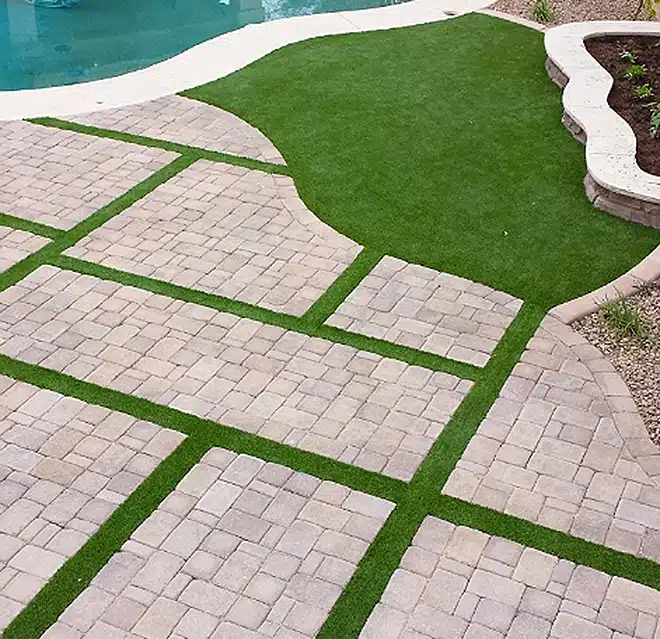
Using artificial turf around a patio can create a consistent green setting beside stone, concrete, brick, or porcelain paving. The goal is not to cover every open area, but to balance hard and soft surfaces in a way that suits the property, local climate, and household routine. With careful planning, homeowners can create an inviting space for meals, quiet breaks, family gatherings, and everyday outdoor use.
Start with the Way You Use the Patio
Sketch the yard and mark doors, steps, gates, drains, trees, and existing garden beds. Then identify the main activities and the routes between them. This simple plan helps prevent a common design problem: adding attractive features without leaving enough room to use them comfortably.
Think about the view from indoors, too. Large windows and patio doors often frame the backyard, so the lines of the paving and green areas should look deliberate from inside the home as well as from the garden. Repeating a shape or material in two or three places can make the design feel coordinated without making every feature identical.
Create a Clean Transition Between Paving and Green Space
Artificial turf can provide a visually even surface alongside paving, especially where natural grass struggles with shade, foot traffic, or limited soil depth. However, the transition needs careful groundwork. The surface should sit at a suitable height, water should be directed away from buildings, and the edge should be secured so it does not curl, shift, or create a trip hazard.
Choose an Edge That Fits the Design
Metal edging, concrete restraints, brick borders, and stone bands can all separate paving from the green area. A narrow border in a tone that echoes the patio may make the change in material feel intentional. Wider borders can also provide space for gravel or low-growing plants, though they need to be considered in the drainage plan.Avoid designing edges only for appearance. A very narrow strip can be difficult to clean, while a complicated pattern may require more cuts and careful installation. Simple lines are often easier to maintain and can make a small yard appear more spacious.
Plan the Patio Shape and Surrounding Surface Together
Use the patio as the main anchor, then decide where the green area should lead the eye. It might connect the patio to a side gate, frame a seating nook, or create a clear view toward a tree or garden feature. Leaving some open space can be more effective than filling every corner with pots, furniture, and decorative objects.
Three Practical Layout Choices
- A simple rectangular layout: Keep the patio as a defined dining or lounging zone, with a broad green section along one side. This works well when the yard is compact and a straightforward route to the gate is important.
- A curved garden layout: Use a curved edge to soften a square patio and guide movement toward planting beds or a separate bench. Keep the curve broad enough to look natural and avoid creating thin, awkward strips.
- A series of connected zones: Divide a larger backyard into dining, play, and relaxation areas, linking them with a consistent surface palette. Make sure each zone has a clear route and enough space for its intended activity.
Select Materials That Work Well Together
Consider how materials look in both sunlight and shade. Samples can appear different outdoors than they do in a showroom, and wet surfaces may change color. If possible, compare samples beside the house exterior and existing paving before making a final choice. The combination of artificial turf, patio paving, and borders should also suit the intended use of the yard. A family space may need durable surfaces and open room for movement, while a small relaxation area may benefit from softer shapes and a few carefully chosen plants.
| Design Element | What It Contributes | Planning Point |
| Patio paving | Defines the main gathering area | Allow room for furniture and walking routes |
| Green surface | Softens the hardscape and adds visual continuity | Prepare a stable base and plan drainage |
| Border or edging | Creates a clear, finished transition | Select a durable edge suited to the materials |
| Planting beds | Add color, height, and seasonal interest | Keep mature plant size and watering needs in mind |
| Outdoor furniture | Makes the patio useful for everyday activities | Choose pieces that fit without blocking access |
Make Comfort Part of the Layout
Furniture placement has a strong effect on movement. Leave enough room to pull chairs out, carry food from the house, and pass through the area without stepping over planters. In a small yard, a built-in bench or compact table may be more practical than several large pieces. In a larger space, furniture can help define separate zones without adding physical barriers.
Three Details That Improve Everyday Use
- Keep routes obvious: Create a clear path between the house, patio, gate, and any storage area. Avoid placing decorative pots where people naturally walk.
- Plan for shade and privacy: Position seating with the sun and neighboring sightlines in mind. Use screens or planting where appropriate, but avoid blocking useful daylight or access.
- Choose furniture for the space: Measure the patio before buying a table, chairs, or lounge set. Leave comfortable circulation space around the furniture rather than filling the entire paved area.
Prepare the Ground Before Installation
Drainage deserves particular attention near the house. Water should not be directed toward foundations, door thresholds, or neighboring property. Existing drains and downspouts should remain accessible, and the finished levels should not create a low point where water collects. Where the site has persistent drainage problems, obtain advice from a qualified installer or drainage professional before work begins.
Artificial turf should be selected for its intended setting, including expected foot traffic, exposure to sunlight, and the way the area will be used. Ask suppliers about backing, pile height, warranty terms, cleaning guidance, and the base requirements for their specific product. A sample viewed beside the patio can help assess color and texture before committing to the full area.
Three Installation Checks to Make
- Confirm the levels: Check how the patio, edging, and adjacent surface meet, especially near doors and steps. The transition should be stable and should not create an unexpected raised lip.
- Protect water flow: Make sure the layout preserves drainage routes and does not trap water against the home. Keep access to drains and inspection points clear.
- Follow product guidance: Use the recommended base, joining method, and edge restraint for the selected material. If the site has unusual slopes or drainage issues, seek professional assessment before installation.
Keep the Finished Space Looking Cohesive
For artificial turf, routine care depends on the product and how often the area is used. Remove leaves and debris, address spills promptly according to the manufacturer’s instructions, and brush flattened fibers when recommended. Check seams, edges, and heavily used spots from time to time so small issues can be handled before they become more noticeable. Furniture feet and heavy planters should be positioned with care to avoid unnecessary pressure or wear.
The patio itself also needs regular attention. Sweep paving, clean stains with suitable products, and inspect joints or edging for movement. If outdoor cooking is part of the plan, place grills and other heat-producing equipment according to the manufacturer’s safety instructions and keep hot surfaces away from synthetic materials. Designate a suitable hard surface for cooking rather than assuming every part of the garden can safely serve every purpose.
Conclusion
Frequently Asked Questions
Yes, provided the site is prepared correctly and the two surfaces meet at a stable, suitable height. The base, edging, and drainage plan should be designed for the actual conditions rather than treated as minor finishing details.
Start by defining the main activities and the space needed for furniture, access, and circulation. The patio often becomes the anchor for the layout, but both surfaces should be planned together so the final boundaries and levels work as one design.
Use a limited material palette, keep walking routes clear, and avoid filling every corner with furniture or decorations. Consistent lines and a simple border can make the yard feel more open and easier to navigate.
Think about durability, appearance, installation requirements, and how the edge will handle everyday use. The edging should hold the materials in place, create a neat transition, and work with the planned drainage system.
Not every project requires a professional, but complex levels, drainage concerns, large areas, or difficult edges may benefit from experienced help. Follow the product instructions and local requirements, and get specialist advice when the site conditions are uncertain.

Let Us Call You
Thank you for contacting us!

Searching through dozens of home and commercial service providers is a thing of the past. Rely on Neighborly’s national network of trusted, local service professionals for all your home and commercial service needs.
 App Store
 Google Play Store