


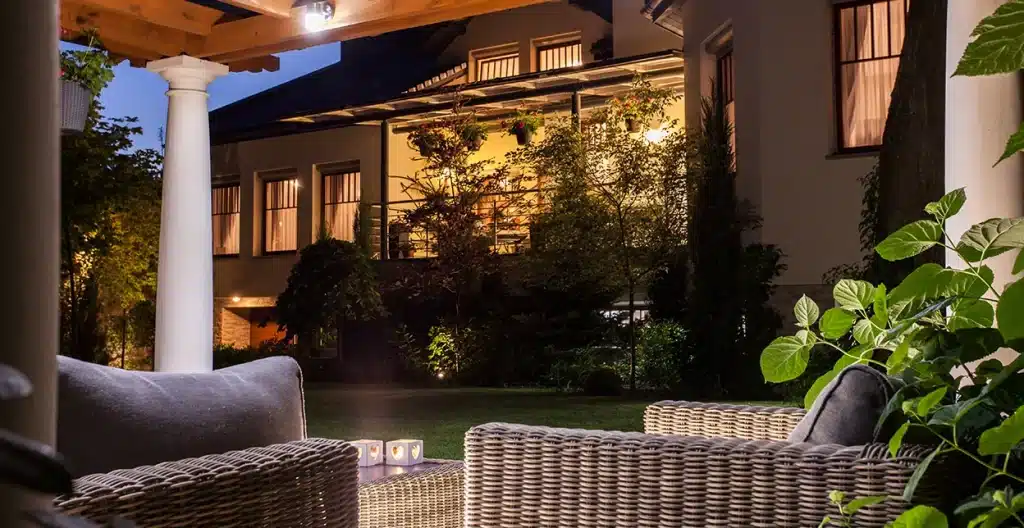
Lawn borders provide a practical way to define these transitions. They create visual separation between grassy areas and outdoor living spaces while helping homeowners maintain clearer boundaries around patios, seating areas, pathways, and planting beds. The right border can also reduce routine trimming, protect certain surfaces from encroaching grass, and make the entire layout easier to maintain.
Good boundaries do not have to be elaborate or expensive. A simple, clean edge along a patio can create a noticeable improvement, while a curved border around a seating area can make the landscape feel more natural. The best choice depends on the yard’s layout, the materials already in place, drainage conditions, and the amount of maintenance a homeowner wants to manage.
Why Lawn Borders Make Outdoor Spaces Feel More Organized
Grass can gradually grow over paving joints or spread into planting beds. Soil and mulch may spill onto nearby surfaces, while repeated foot traffic can wear away the lawn beside a frequently used entrance. A defined edge helps establish where each surface begins and ends, making the yard easier to understand visually.
Lawn mowing and edging work together to maintain these boundaries. Mowing keeps the grass at a suitable height, while edging refines the line where the lawn meets another surface. Neither task replaces the need for suitable landscape design, but both can help preserve the appearance of an outdoor space once its boundaries have been established.
The effect is especially noticeable around outdoor living areas. A patio with a crisp grass border appears more deliberate than one where blades grow unevenly between paving and soil. Similarly, a seating area surrounded by a clearly defined lawn can feel connected to the garden without losing its identity as a separate place to relax.
Choosing the Right Border for Each Outdoor Area
Patios and Outdoor Dining Areas
Patios benefit from boundaries that keep grass from spreading over paving and make routine maintenance more predictable. Where the patio meets the lawn, a clean-cut natural edge may be sufficient if the soil holds its shape and the area does not experience heavy foot traffic.For a more durable separation, homeowners can consider suitable pavers, stone edging, or a professionally installed landscape border. The material should complement the patio rather than compete with it. For example, a restrained stone border may work well beside a natural stone terrace, while a simple edge can suit a contemporary concrete patio.
Pay attention to the finished height. A border that rises too far above the surrounding surfaces can become a tripping hazard or interfere with mowing equipment. The transition should remain comfortable to cross wherever people regularly move between the lawn and patio.
Walkways and Garden Paths
Pathways need clear edges because grass and weeds can gradually obscure their usable width. A defined boundary also helps distinguish the walking surface from nearby planting areas, particularly along narrow side yards or shaded routes.Choose a border that can follow the path without leaving awkward gaps. Curved layouts require flexible materials or careful placement of smaller units, while straight paths can accommodate more uniform edging. In either case, avoid creating narrow pockets where debris accumulates and becomes difficult to remove.
The edge should also allow rainwater to move as intended. Raising a border without considering the surrounding grade can trap water beside the path or redirect runoff toward a building. Check the existing drainage pattern before installing a permanent boundary.
Seating Areas and Garden Beds
A lawn that surrounds a seating area can create a relaxed, open appearance. The challenge is to keep the grass from invading planting beds or growing beneath movable furniture. A clearly defined perimeter makes those areas easier to mow around and helps prevent the landscape from looking crowded.For garden beds, the border should accommodate the plants rather than restrict them. Some plants spread through runners or underground stems, so a decorative edge alone may not prevent them from moving into the lawn. Select suitable containment methods where necessary, and leave adequate room for mature plant growth.
Three Practical Ways to Create Cleaner Lawn Boundaries
1. Use Natural Edges Where the Layout Allows
A natural edge is formed by cutting a distinct line between grass and the neighboring surface or planting bed. It can work well in informal gardens and is often suitable when homeowners want a simple appearance without adding another material to the landscape.- Mark the intended line with a garden hose or other flexible guide before cutting a curved edge.
- Use an appropriate edging tool to create a clean separation without digging unnecessarily close to tree roots or buried utilities.
- Remove loose grass and soil from the cut line so the boundary remains visible.
- Recheck the edge periodically, especially during periods of vigorous growth.
2. Install a Suitable Physical Border
Materials such as stone, concrete pavers, metal, or purpose-made landscape edging can create a more permanent separation. Each has different installation requirements, costs, and maintenance considerations, so the choice should reflect the conditions of the yard.- Select a material that complements nearby paving, garden structures, and the overall landscape.
- Check the manufacturer’s installation guidance and prepare a stable base where the chosen product requires one.
- Keep the finished edge at an appropriate height for safe movement and convenient mowing.
- Inspect joints and connections periodically for movement, gaps, or damage.
3. Shape the Border Around Everyday Use
A border should support the way people actually use the yard. A narrow lawn strip beside a busy patio may be difficult to mow, while a sharp corner next to a main walkway can complicate movement. Small changes to the shape can make both maintenance and access easier.- Leave enough room around furniture and fixed structures for routine mowing and cleaning.
- Use gentle curves where they suit the garden, but avoid unnecessarily complicated outlines that are difficult to maintain.
- Keep access points open and make sure the border does not obstruct gates, steps, or service areas.
- Consider future planting growth so the boundary remains useful as shrubs and ornamental grasses mature.
Matching Border Materials to Different Needs
Lawn Border Options at a Glance
| Border type | Best suited to | Main consideration | Maintenance needs |
| Natural cut edge | Informal lawns and garden beds | Can gradually lose its shape | Periodic recutting |
| Stone or concrete pavers | Patios and defined garden boundaries | Requires a stable, well-prepared base | Occasional joint and level checks |
| Metal landscape edging | Clean lines and curved layouts | Correct installation and safe finished edges are important | Periodic inspection |
| Plastic landscape edging | Light-duty garden boundaries | Quality and ground conditions affect durability | Checks for movement or exposure |
| Low planting border | Soft transitions between lawn and garden | Plants need room to grow and may spread | Pruning and vegetation control |
Maintaining Clean Transitions Throughout the Year
A regular maintenance routine should include inspecting the border, removing grass clippings from nearby paving, and addressing small areas of encroachment before they become difficult to manage. When mowing, avoid striking edging materials with the mower blade or wheels. Where equipment cannot reach safely, use a suitable trimmer carefully and follow its operating instructions.
Lawn mowing and edging are most effective when the work follows the shape of the landscape rather than forcing every boundary into a straight line. Curves should remain consistent, corners should be easy to maintain, and the grass height should suit the lawn’s condition. Cutting grass too short to reduce future work can weaken it and leave the surface more vulnerable to stress.
Seasonal changes also affect the maintenance plan. During periods of heavy rain, inspect low points where water may collect beside a border. In dry weather, avoid unnecessary disturbance of dry soil and check whether established plants need appropriate watering. After winter, look for displaced edging or damage caused by ground movement, foot traffic, or maintenance equipment.
Common Border Problems and How to Prevent Them
Another issue is using a border to compensate for poor drainage. If water regularly pools between a patio and lawn, adding a raised barrier without correcting the underlying conditions may make the problem worse. Identify where the water originates and determine how it should move across the property before changing the grade or installing a permanent edge.
Homeowners should also avoid making every border unnecessarily complex. Multiple tight curves, tiny planting pockets, and narrow strips of grass may look appealing on a drawing but can be difficult to maintain in practice. A simpler layout can provide a cleaner appearance with less trimming and fewer places for debris to collect.
Finally, do not overlook the condition of the surrounding lawn. A crisp edge cannot compensate for widespread bare patches, compacted soil, or grass growing poorly because of unsuitable conditions. Address the underlying lawn-care needs as well as the boundary itself.
Conclusion
The strongest results come from choosing boundaries that suit the layout, selecting materials appropriate for the conditions, and keeping the design practical for everyday use. Regular inspection and timely trimming then help preserve the clean lines that make the space look finished.
A thoughtful approach to Lawn Mowing and Edging keeps these transitions consistent while supporting the wider landscape. With the right balance of design and maintenance, homeowners can create outdoor areas that are comfortable to use, easier to care for, and better suited to the way they live outside.
Frequently Asked Questions
They can help limit encroachment, especially when a suitable physical border is installed correctly. However, grass may still spread over the top or through gaps, so occasional inspection and maintenance remain necessary.
It depends on the property and the desired appearance. Natural edging is adaptable and suits informal gardens, while physical edging can provide a more durable boundary. Soil conditions, foot traffic, budget, and maintenance preferences should guide the decision.
During active grass growth, edges may need attention every few mowing sessions or more frequently in fast-growing areas. Growth rates and weather vary, so inspect the boundary regularly and adjust the schedule to the actual condition of the lawn.
Yes. Clear transitions between grass, paving, and planting areas can make a compact yard feel more organized. Simple shapes and appropriately sized borders often work better than complicated designs that divide the space into too many small sections.
Check drainage, buried utilities, nearby roots, material compatibility, finished height, and the amount of excavation required. For extensive installations or uncertain ground conditions, professional advice can help prevent avoidable problems.

Let Us Call You
Thank you for contacting us!

Searching through dozens of home and commercial service providers is a thing of the past. Rely on Neighborly’s national network of trusted, local service professionals for all your home and commercial service needs.
 App Store
 Google Play Store