


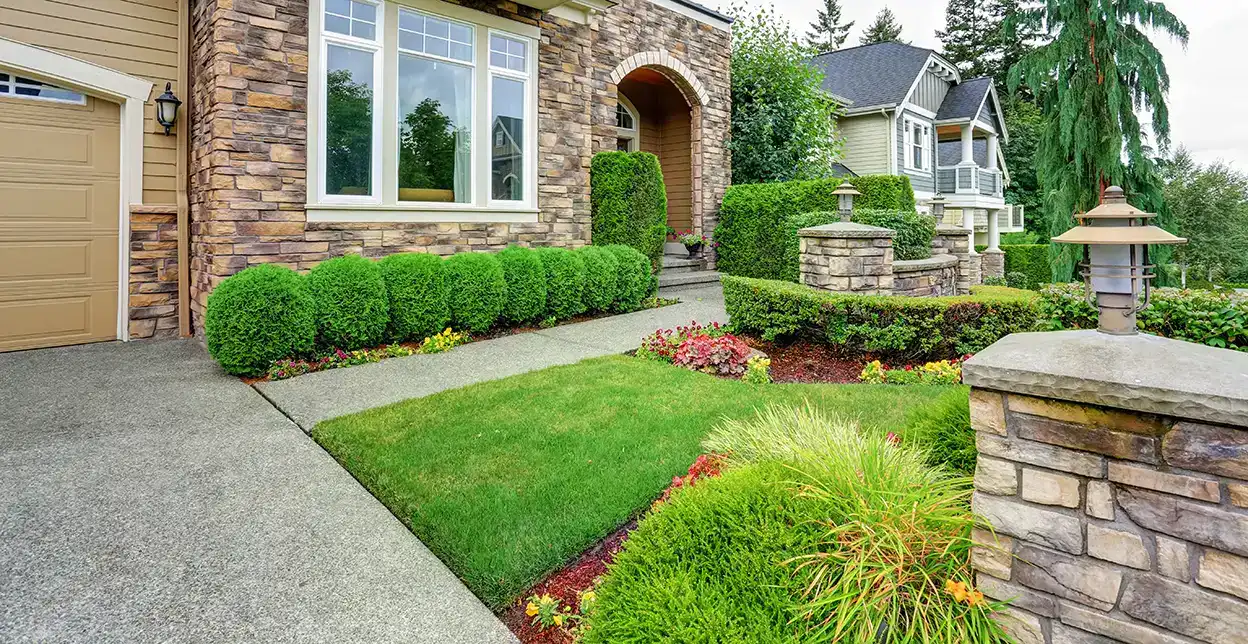
For homeowners in Frisco, thoughtful planning is valuable because outdoor areas often need to serve several purposes. A family might want space for children to play, somewhere to entertain guests, a quiet corner to relax, and enough greenery to keep the property feeling natural. Good landscape design brings these needs together while making the yard easier to use and maintain.
Start by Deciding What the Yard Needs to Do
A family that hosts gatherings may need an open entertaining area, while another household may care more about privacy and quiet seating. A property with young children may need uninterrupted lawn space, whereas homeowners who rarely use grass may prefer larger planting beds and paved areas.
Consider questions such as:
- Where do people naturally gather?
- Which parts of the yard receive the most sunlight?
- Is privacy important?
- Will children or pets need open space?
- How much maintenance is realistic?
Think About the Yard as Connected Zones
A backyard might have a dining area close to the house, an open lawn farther out, and a planted border along the fence. A side yard could become a practical walkway rather than an unused strip of grass.
Let Each Area Have a Clear Role
Outdoor zones work best when they connect naturally. A patio should have an easy route to the lawn, while planting beds can soften the transition between hard surfaces and open areas.Useful zones may include:
- Outdoor dining or entertaining
- Open lawn for recreation
- Garden or planting areas
- Shaded seating
- Walkways between major features
Pay Attention to Sun and Shade
Instead of looking at sunlight only once, homeowners should observe how it moves across the property during different parts of the day. Seasonal changes also matter because the position and intensity of sunlight can shift throughout the year.
Trees can play an important role here. Properly positioned shade can make outdoor areas more comfortable during hot periods while also creating visual depth.
At the same time, excessive shade can make turf maintenance more difficult. A lawn that performs well in an open area may thin beneath a dense canopy. Understanding these relationships before construction or planting begins can prevent costly adjustments later.
Use Hardscape Where It Adds Real Value
The better question is whether a feature solves a real problem.
For example, a pathway may be worthwhile if people regularly walk from the driveway to the backyard. A patio extension could make sense if the existing seating area is too small for family gatherings. A retaining wall may be necessary where elevation changes make the yard difficult to use.
A balanced property typically leaves enough room for greenery and natural movement rather than covering every section with concrete or stone.
Make Lawn Areas Work Harder
Instead, its placement should reflect how the yard is used. A broad central lawn can provide valuable open space, while narrow strips along fences may require more maintenance than they are worth.
When turf becomes damaged or a new section needs to be established, sod installation can provide an efficient way to create an immediately established grass surface. The important part is making sure the area is suitable for turf before installing it.
Poor drainage, deep shade, or constant foot traffic can make grass a difficult choice regardless of how attractive it looks initially.
Choose Plants for the Conditions, Not Just Appearance
Before choosing plants, consider soil, available moisture, sunlight, mature size, and the amount of maintenance required. Plants should also be positioned with their future growth in mind.
A small shrub planted too close to a walkway may eventually block the path. A tree planted directly beneath utility lines may create future maintenance complications. These issues are much easier to prevent than correct.
Create Layers Instead of Random Planting
A landscape can feel more natural when plants are arranged in layers. Taller trees provide a backdrop, medium-sized shrubs define spaces, and lower plants or groundcovers fill the foreground.This creates depth without requiring an excessive number of different species. Repeating selected plants in several areas can also give the property a more cohesive appearance.
Consider Drainage Before Adding Decorative Features
Low areas may collect water, while sloped properties can experience runoff that carries soil or mulch away. Adding plants or decorative features without addressing these patterns can make future maintenance more difficult.
Homeowners should observe the yard during and after significant rainfall. Look for areas where water remains, where soil is washing away, or where paths become difficult to use.
Potential solutions may involve grading, drainage channels, planting choices, or changes to surface materials. The appropriate solution depends on the property and the severity of the problem.
Build Maintenance Into the Original Plan
For example, a narrow planting strip may look attractive but be difficult to access for pruning. A dense collection of plants around an outdoor seating area may require frequent trimming to remain neat.
Homeowners should think about:
- How easily plants can be reached
- Where irrigation will be needed
- How leaves and debris will be removed
- Whether mowing equipment can move efficiently
- How mature plants will affect nearby features
Keep Trees Healthy as the Landscape Develops
As trees mature, branches can extend toward roofs, walkways, driveways, or other landscape features. Regular tree trimming may be needed to maintain clearance and support healthy growth.
Tree placement should also be considered before new landscaping is installed. Root zones can affect paving and planting, while increasing shade may eventually change which plants can thrive underneath the canopy.
A landscape that accounts for the future size of its trees is far easier to maintain than one designed around their current appearance.
Use Lawn Care to Support the Layout
For homeowners focused on lawn aeration, timing and turf condition matter. Compacted soil can limit the movement of air, water, and nutrients around grass roots, particularly in areas that receive repeated activity.
Aeration can be useful when conditions call for it, but it should be viewed as one part of broader turf management rather than a universal solution for every lawn.
Leave Room for Future Changes
It is also worth thinking about plant maturity. A newly installed landscape can look sparse during its first year, but plants may eventually fill much more space than expected. Designing around mature dimensions helps avoid overcrowding.
A Thoughtful Design Can Improve Everyday Use
A short path can eliminate muddy shortcuts. A strategically placed tree can make a seating area more comfortable. A planting bed can hide an unattractive fence. A properly sized lawn can give children room to play without forcing homeowners to maintain unnecessary turf.
These improvements may seem small individually, but together they can change how people experience the property.
When Professional Planning Makes Sense
A professional can evaluate how different features interact, recommend suitable plant placement, and help coordinate turf, hardscape, trees, and maintenance requirements. This can be especially useful before making major changes because correcting a poor layout after installation may involve removing established plants or rebuilding hardscape.
For homeowners considering professional assistance in the area, The Grounds Guys of Frisco is one option for broader lawn and landscape services. Professional support can be useful when a project needs both an initial plan and ongoing maintenance after the work is completed.
Common Planning Mistakes to Avoid
Common issues include:
- Making the patio too small for its intended use
- Planting trees without considering mature size
- Installing grass in unsuitable shade
- Ignoring drainage until construction is finished
- Creating pathways that do not follow natural movement
- Choosing high-maintenance plants without considering available time
Creating a Yard That Ages Well
Choosing durable materials, allowing enough room for plant growth, and keeping maintenance realistic can help the landscape remain attractive without requiring constant redesign.
It is also worth remembering that not every section needs to be perfectly manicured. A combination of structured planting, open lawn, mature trees, and natural-looking areas can give the property character while reducing unnecessary maintenance.
Conclusion
Thoughtful landscape design can connect lawn areas with patios, trees, planting beds, and walkways while accounting for sunlight, drainage, maintenance, and future growth. When these factors are considered before installation, homeowners can create an outdoor space that feels natural rather than pieced together.
For Frisco properties, the best results come from designing around the actual home, the people who use it, and the conditions of the yard. With that foundation, improvements such as new turf, better planting areas, tree management, and outdoor living features can become part of a landscape that remains useful and attractive for years.
FAQs About Landscape Design in Frisco
Start with how you want to use the space. Then evaluate sunlight, drainage, existing trees, soil, and the amount of maintenance you are willing to handle.
Yes. Turf placement is an important part of planning an outdoor layout. The lawn should be located where grass can thrive and where it supports the way the property is used.
Sod can be useful when a homeowner wants established turf quickly or needs to replace large areas of damaged grass. The underlying soil and drainage should be suitable before installation.
Definitely. Trees influence shade, root zones, privacy, and future maintenance. Their mature size should be considered before placing patios, turf, or other landscape features nearby.
No. Aeration is most useful when soil compaction is limiting turf performance. The need depends on soil conditions, grass type, traffic, and overall lawn health.
There is no universal schedule because tree species, age, growth rate, and location all matter. Trees should be evaluated based on their health, structure, and proximity to structures or pathways.

Let Us Call You
Thank you for contacting us!

Searching through dozens of home and commercial service providers is a thing of the past. Rely on Neighborly’s national network of trusted, local service professionals for all your home and commercial service needs.
 App Store
 Google Play Store